
Search Monroe County Genealogy
Monroe County Genealogy research works well because the county keeps both official records and local history material close together. The Register of Deeds covers birth, marriage, death, and land records, while the Local History Room & Museum keeps newspapers, early vital records, censuses, naturalization files, tax rolls, probate records, military lists, court records, church records, plat maps, school records, cemetery records, family history books, and a photo archive. That mix makes Sparta a practical place to start. If you want a record copy, an index hit, or a better clue for an older family line, Monroe County gives you several ways to move forward.
Monroe County Genealogy Records
The Monroe County Register of Deeds is at the Monroe County Administrative Center, 202 South K St., Room 2, Sparta, WI 54656, with phone 608-269-8716. The office handles birth, marriage, death, and land records. Its real estate records include deeds, land contracts, mortgages, UCC realty filings, plats, certified survey maps, and federal tax liens. For Monroe County Genealogy, that means you can work both the vital record trail and the property trail from the same county office.
The vital record side is just as broad. The county notes birth, death, marriage, divorce, domestic partnership, and military discharge records. That makes the office useful not only for a standard birth or marriage copy, but also for later family proof that appears in military or partnership material. A Monroe County search often improves when you look at both the civil record and the real estate record, because the same surname may show up in one place first and then confirm itself in the other.
Monroe County Genealogy work benefits from the county's long document trail because land and vital records can answer different questions. A marriage record can identify a spouse, while a deed can place the same household on a map. A tax lien or plat map can show a move between town and farm. The Register of Deeds gives you the official backbone for all of those lines.
When you need an official copy or a title clue, start with the county register. When you need the story behind the record, move into the museum and archive sources that sit alongside it. In Monroe County, the search path is stronger when those two sides stay connected.
Monroe County Genealogy Room
The Monroe County Local History Room & Museum at monroecountyhistory.org is a major county genealogy stop. It is at 200 West Main Street, 1st Floor, Sparta, WI 54656, and the phone number is 608-269-8680. Its collections include microfilm of county newspapers, early vital records, Wisconsin and U.S. censuses, naturalization records, tax rolls, probate records, military registration lists, court records, church records, plat maps, school records, cemetery records, family history books, and a photo archive. That is the kind of local depth that can turn a one-line index hit into a real family profile.
The museum website also offers searchable indexes. The birth record index runs from the 1850s through 1944, and the marriage record index runs from 1854 through 1968. Those indexes are especially useful when you want to narrow a surname before you request a copy or examine the microfilm. For Monroe County Genealogy, the indexes save time because they show where the local record trail begins, even before you open a register book or a newspaper reel.
The Monroe County Local History Room image in the manifest comes from Monroe County Local History Room.
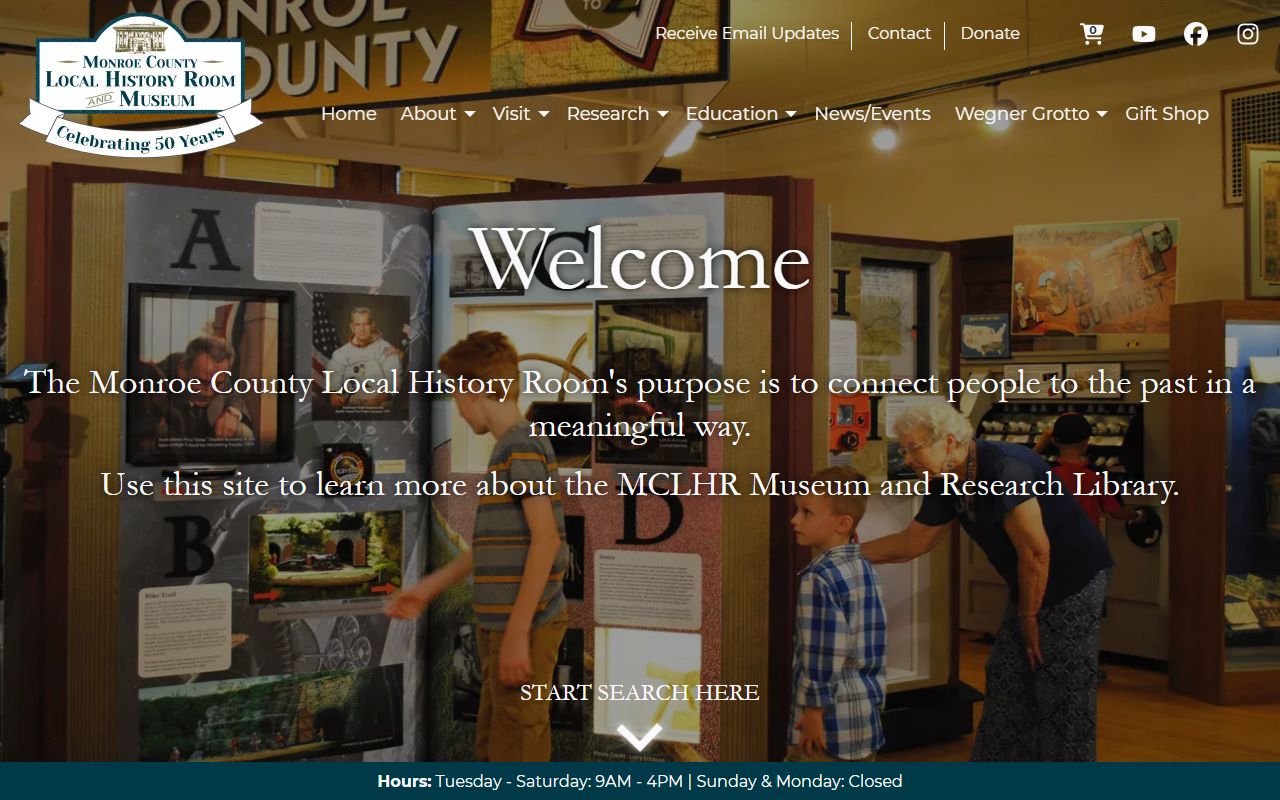
This image fits Monroe County Genealogy because the museum and history room tie together the county's newspapers, indexes, and family research files.
The local history room is strongest when you need context. A newspaper notice may explain a move. A cemetery record may confirm a burial. A church record may answer a marriage question that never made sense in the vital index alone. That mix is what makes this repository more than a simple lookup point. It is a place to follow a family across several kinds of Monroe County evidence at once.
Monroe County Genealogy Search Path
The easiest Monroe County Genealogy path is to begin with the county register, then move to the local history room, and then use the museum's indexes to decide what to request next. If you already know a surname, the birth and marriage indexes can tell you whether the family appears in the local record range you need. If you know only a location, the plat maps, tax rolls, and newspaper reels can help you place the household before you chase a specific certificate.
This county works well for layered research. A family history book can point to a cemetery. A cemetery record can point to a church. A church record can point to a marriage or burial date. A marriage index can guide you to a certificate, while a land contract can show who stayed on the property long enough to matter in the next census. The point is not to treat each record as isolated. The point is to let one Monroe County source confirm the next one.
That approach matters because Monroe County has enough record types to tempt a researcher into stopping too early. A single newspaper hit can feel complete, but it may only be the doorway. The county's censuses, probate files, and military lists often add the names that the first record missed. Monroe County Genealogy becomes much stronger when the search is broad enough to compare several record classes before you call the line finished.
If you are working a family that moved in and out of Sparta, start with the local history room and then check the register for the official copy. If you are working a land line, start with the deed, then use the map, then look for the family in the paper. That is the sort of county workflow Monroe rewards.
Monroe County Genealogy Backup
For older material and regional support, the UW-La Crosse Murphy Library special collections are a strong backup source for Monroe County Genealogy. Broad county research notes that the area research center serves Monroe County and holds pre-1907 vital records, probate cases, deed records, naturalization papers, and tax rolls. That makes it useful when a Monroe County line reaches into older public records or when the local search needs a countywide or regional confirmation.
The regional archive matters because Monroe County families do not always stay in one neat courthouse track. A pre-1907 birth, marriage, or death may sit in a broader regional record set. A deed may show up in a place that helps explain a move. A probate file may connect several generations. When that happens, the La Crosse archive network gives you a second place to test the clue and keep the search moving.
Statewide support also helps when a Monroe County question reaches beyond the local holdings. The Wisconsin Historical Society and the Library of Congress Wisconsin genealogy guide are useful when you need a broader view of Wisconsin record types and research paths. They are not a replacement for the Monroe County office or museum, but they are good companions when the local trail gets thin.
Monroe County Genealogy is strongest when you use the county office, the museum indexes, and the regional archive together. That three-part path gives you both the exact copy and the context around it.