
Search Dane County Genealogy
Dane County genealogy research can move in several directions at once. The county register of deeds keeps the core birth, marriage, death, land, and military files, while Madison's state and university collections add older family history, county histories, and manuscript material. That gives you a good mix when you already know a surname but still need a place, a date, or a record type that fits. Start with the county office when you want an official copy, then widen the search to local societies and archives when the first index hit is not enough. Dane County has depth, but the key is to work in order.
Dane County Genealogy Overview
Dane County Genealogy Records
The Dane County Register of Deeds at danecounty.gov/registerofdeeds is the county office that anchors most genealogy work in Madison and the rest of Dane County. It is in the City-County Building, Room 106A, at 210 Martin Luther King Jr. Blvd. The office keeps birth records from 1860, marriage records from 1839, death records from 1876, land records, and military discharges. That spread gives you a record trail that can move from a family name to a house lot, a farm tract, or a service record.
The county office also ties into the broader vital-record system. The Vital Records Section includes birth, death, marriage, and domestic partnership records, while the Probate Court includes guardianship and probate court records. That makes Dane County a good place to check more than one file type at the same time. A marriage record may point to a probate folder. A land file may point to a guardian. The county setup is broad enough that a careful search can connect those parts without jumping from one office to another too fast.
Dane County genealogy is also helped by the Dane County Area Genealogical Society. The society provides research resources, meetings, a newsletter, and education. It is the kind of local group that can save time when a surname keeps showing up in Madison area records. A society guide will not replace the county file, but it can help you see where to look next and what record type is worth the chase.
Note: Dane County research works best when you pair the register's official file with the state history collection and the local society instead of treating the county office as the only stop.
Dane County Genealogy Images
The manifest links the Dane County Area Genealogical Society image to dcags.org, which is a useful local launch point for family history work in Madison.
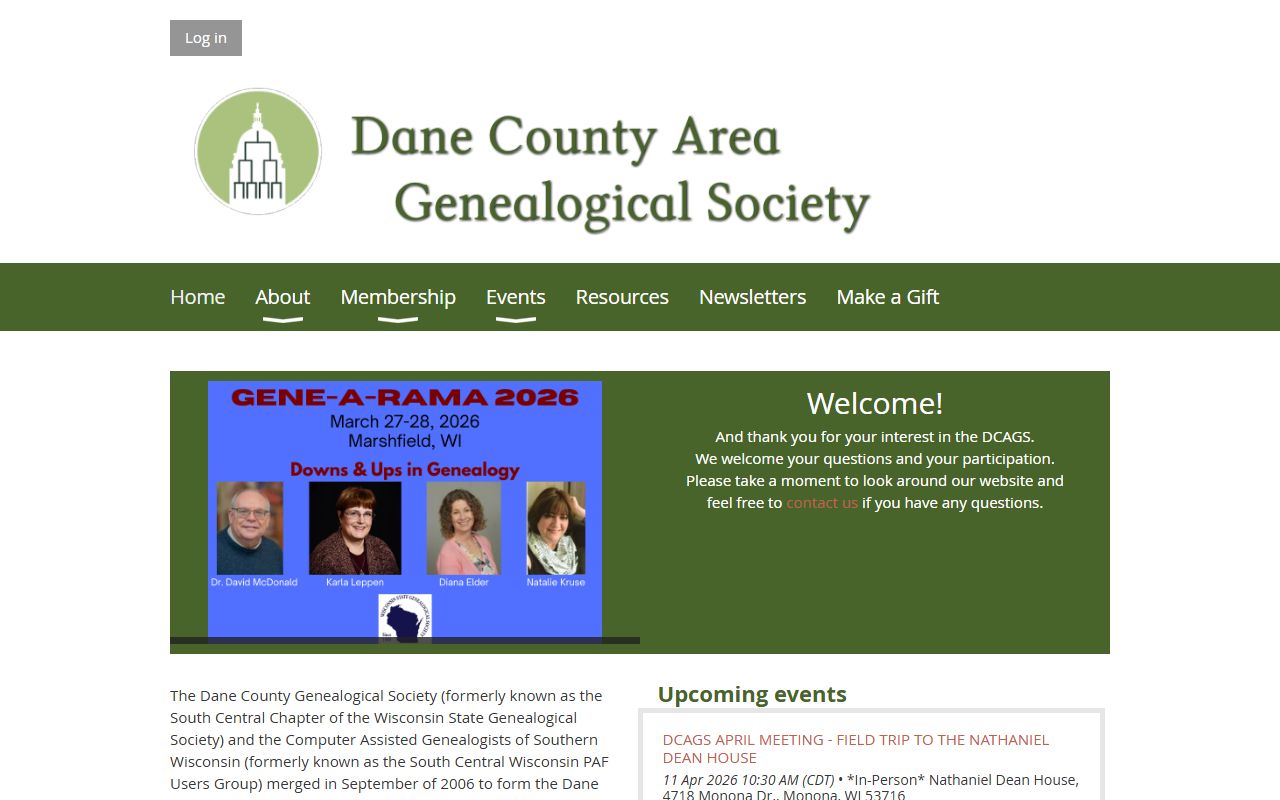
This local image fits Dane County because a society lead can point you to the right surname path before you move into the office files.
The manifest links the Wisconsin Historical Society image to wisconsinhistory.org, the state collection with more than 3,000,000 family history records.
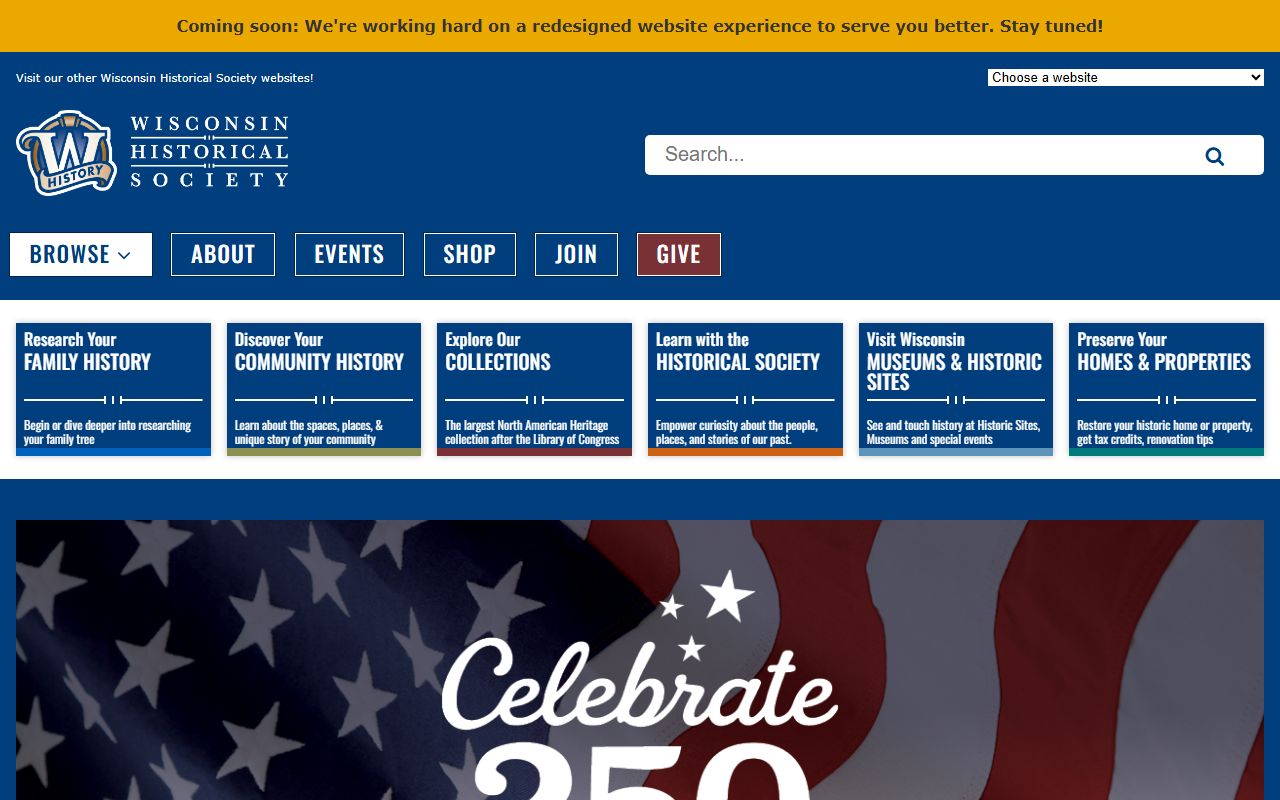
It belongs here because Dane County researchers often need older indexes, newspaper clippings, and property records from the state level.
The manifest links the BadgerLink image to badgerlink.dpi.wi.gov, which is another strong Wisconsin research tool.

BadgerLink is useful when you want newspaper access, history databases, or a clean way to cross-check a name from the county file.
Dane County Genealogy Help
The Wisconsin Historical Society is the strongest broad backup source for Dane County genealogy. It holds birth, death, and marriage indexes, newspaper clippings, property records, and a large family history collection. Because Dane County sits in Madison, the society can be a fast next step when a county record gives you a name but not enough background. A statewide index can often confirm what the county file started.
The UW-Madison Archives adds a different kind of help. Its large manuscript collection and town and county histories are useful when the family line belongs to a neighborhood, a school, a church, or a local business as much as to a courthouse file. In Dane County, that matters because many families left both official records and local paper trails. The archives help you read the part that the county book does not spell out.
For older land or migration work, the BLM General Land Office Records can show early federal land activity, and the National Archives at Chicago can help with federal court, military, and naturalization records. Those tools are not a replacement for the county office. They are the next layer when Dane County genealogy reaches beyond Madison and into earlier American records.
Dane County Genealogy Access
Dane County access is wide enough to be useful, but it still rewards a short plan. Start with the record type you need most. If you need a birth, marriage, or death record, use the register of deeds. If you need guardianship or probate material, use the probate side of the county system. If you need history or local context, move to the Wisconsin Historical Society or the UW-Madison Archives. That order keeps the search clean and avoids a lot of guesswork.
One reason Dane County genealogy works so well is that the county and the state overlap in useful ways. The county has vital records, land, and military discharges. The state has a huge family history collection. The university archive adds manuscript depth. Put together, they give you several chances to find the same person in more than one file. That is often what turns a loose lead into a firm family line.
Before you start, keep these points ready:
- Exact names and common spelling shifts.
- A year or short date span.
- A place in Dane County, such as Madison or a township.
- The record type you want, such as land, marriage, or probate.
That short list makes a Dane County request more direct. It also helps the office or archive move faster because the target is clear.
Note: Dane County has several strong research layers, so a good search usually begins at the county office and then fans out to Madison's state and university collections.
Dane County Genealogy Next Steps
Begin with the county office if you need an official copy or a direct record search. Then move to the society and the Wisconsin Historical Society when you need context, older indexes, or a surname trail that stretches into a bigger family cluster. After that, check the UW-Madison Archives when the family history is tied to a town, school, church, or local business. Each layer adds a different kind of proof.
Dane County genealogy is strongest when you treat the search as a sequence instead of a single lookup. The county file gives you the record. The society gives you the clue. The state and university collections give you depth. That is the pattern that works best here, and it is usually the fastest way to get from a name to a usable family history result.