
Search Clark County Genealogy
Clark County genealogy research works best when you begin with the county office that holds the core record set and then widen the search to local history groups. The Register of Deeds keeps the birth, marriage, death, land, military discharge, and other official files that make a family line easier to track. Clark County also has county-wide historical societies and museums, so you are not limited to one office or one index. If you are trying to place a family in Neillsville, confirm a maiden name, or tie a land tract to a surname, the county gives you a practical route forward.
Clark County Genealogy Overview
Clark County Genealogy Records
The Clark County Register of Deeds at clarkcountywi.gov/register-of-deeds is the main county entry point for genealogy work. The office is at 517 Court Street, Room 303, in Neillsville, and it keeps birth records from 1869, marriage records from 1857, and death records from 1877. It also records real estate documents, UCC filings, federal tax liens, military discharges, and other vital records. That mix matters because a family trace often needs both personal records and the land trail that sits behind them.
The office mission is practical and broad. It is there to record, index, maintain, and provide access to the county record set. Public access is available with staff help, and the office provides both certified and non-certified copies. That makes Clark County useful for researchers who want a clean copy of a vital record, but also for those who need a quick fact check before they move to the next source. The record set is not narrow. It reaches from the courthouse file to the property books.
Clark County also gives researchers a local search path beyond the office itself. The historical societies and museums page at wiclarkcountyhistory.org notes multiple local historical societies across the county and says online birth indexes are available in A-Z form. That means a surname search can begin in an index, move to the office for a copy, and then circle back to a society collection for context. The result is a steadier search and a better chance of seeing how one family line moved from one township to another.
Clark County Record Images
The Clark County Register of Deeds image in the manifest links back to the county office page.
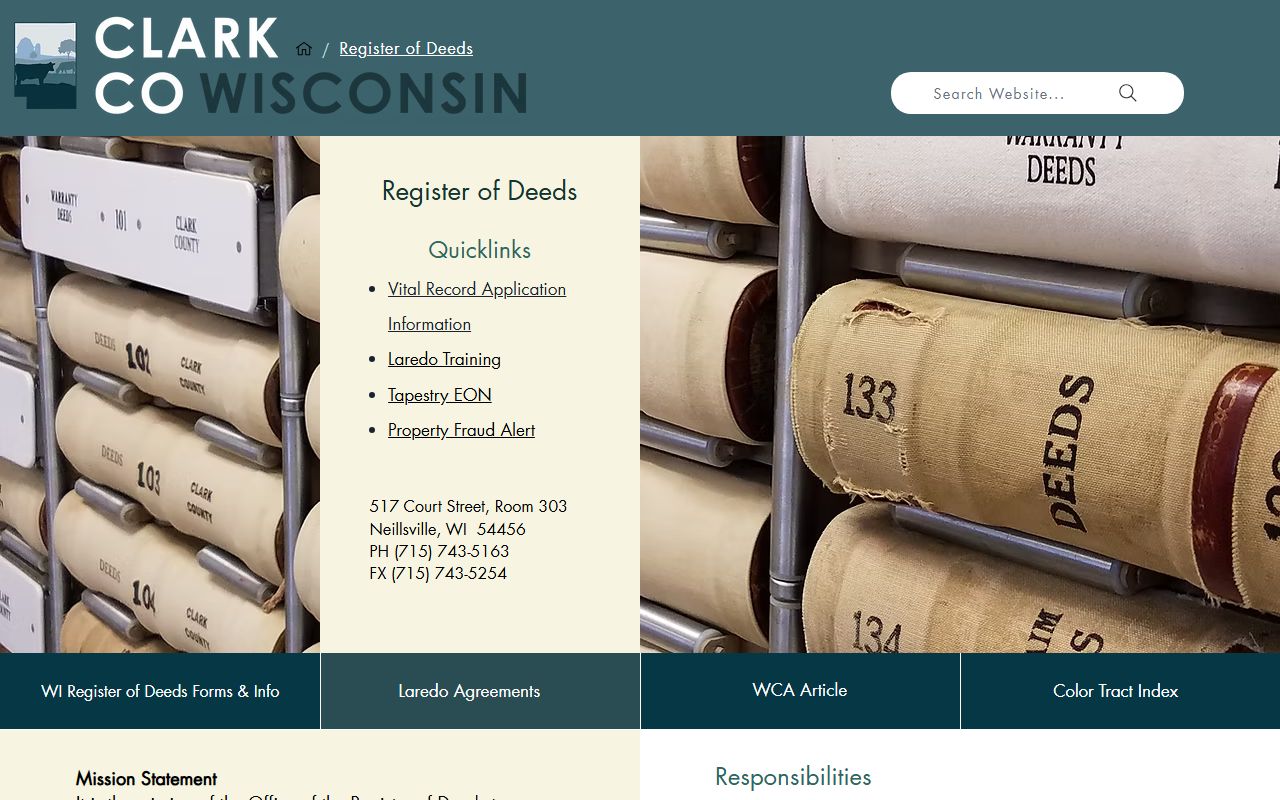
This image matches the office that holds the county's core birth, marriage, death, and land files.
The Clark County historical societies image in the manifest points to wiclarkcountyhistory.org.
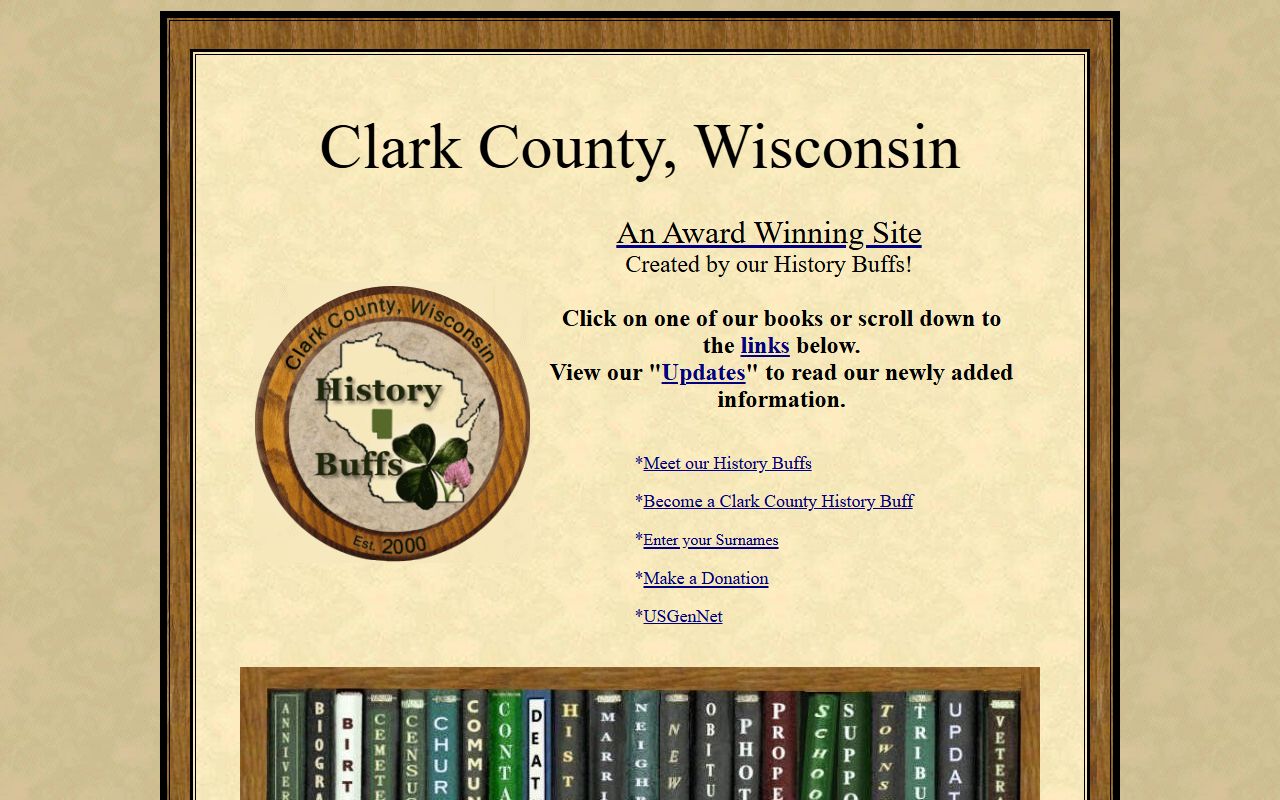
It is a good fit because Clark County research often turns on small local groups that know the family names, places, and church ties behind the paper trail.
The WSGS Clark County image in the manifest links to wsgs.org/clark.
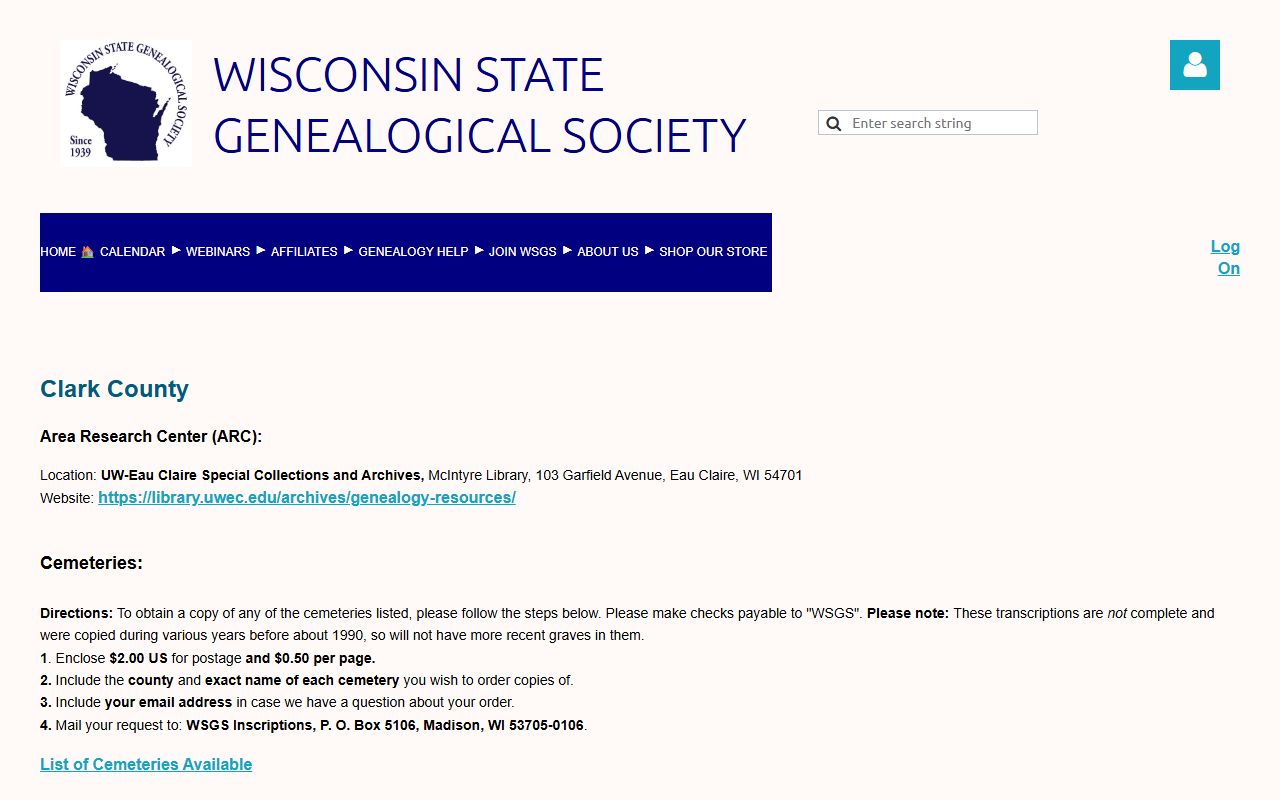
That county guide is useful when you want a Wisconsin-specific starting point before you move into state and federal sources.
Clark County Genealogy Help
The county historical societies and museums are a strong local support layer. They can help with family names, town histories, cemetery clues, and the small stories that do not always appear in an index. For Clark County genealogy, that matters because an index hit is only the start. A society note or museum file can show where a family lived, which church they used, or which neighborhood they kept returning to over time.
For statewide help, the Wisconsin Historical Society is the best broad backup source. It gives you older family material, statewide indexes, and a place to search when Clark County records need a second look. FamilySearch Wisconsin Genealogy is also useful because it lays out the county and state record landscape in one place. When a family line starts before modern civil registration, that kind of overview can save hours.
The BadgerLink portal and the Wisconsin State Law Library are good support tools when you need newspaper access or a clearer read on public-record and probate rules. If a Clark County line reaches into federal land or migration questions, the BLM General Land Office Records site and the National Archives at Chicago can help fill the gap. That mix keeps the search grounded and local, but still wide enough to catch older records.
Clark County Record Access
Clark County public access is straightforward, but it still rewards a short plan. Because the office offers staff assistance, the best approach is to arrive with a clear name, a date range, and a record type in mind. If you need a certified copy, say so up front. If you only need a quick fact check, that should be clear too. The office can move faster when you know what you want and how you plan to use it.
One useful approach is to treat the county in three layers. Start with the Register of Deeds for the official file. Move to the local historical societies for family context and county memory. Finish with state tools when the family line reaches beyond Clark County or when a record is too old for a quick office search. That order keeps the work clean and lowers the chance that you miss a surname variation or a place name tied to a nearby township.
Before you make a trip or submit a request, keep these points close:
- Bring exact spellings and common variants.
- Write down the year or a small date range.
- Note the place name, township, or village.
- Say whether you need birth, marriage, death, land, or military records.
That short checklist is enough to turn a general search into a usable Clark County genealogy request. It keeps the office visit simple and helps you leave with a record that actually answers the question.
Note: Clark County works best when the office search is paired with the county historical groups and the state history tools instead of treated as a one-stop visit.