
Calumet County Genealogy Records
Calumet County genealogy research works well when you treat the county office, the regional archive, and the local history lead as one chain. The county has long-run vital and land records, plus later statewide copies for births, marriages, deaths, and divorces. That gives you a clean way to move from a county search to a broader state check without losing the local name or date. If you are tracing an early family or trying to confirm a modern certificate, Calumet County gives you enough structure to keep the work focused and steady.
Calumet County Genealogy Overview
Calumet County Genealogy Records
The Calumet County Register of Deeds in Chilton is the main county source for genealogy records. The office keeps birth records from 1851 and 1858, marriage records from 1846 and 1850, death records from 1866 and 1856, and land records from 1840. It also notes later statewide vital records access for births from October 1, 1907 onward, deaths from September 1, 2013 onward, marriages from 1907 onward, and divorces from January 1, 2016 onward. That combination makes Calumet County useful for both older family work and modern certificate checks.
The office also provides genealogy records dating back to 1852 for births, 1866 for deaths, and 1846 for marriages, with research hours from 8:30 AM to 4:00 PM daily. Fees are straightforward, $20 for the first copy and $3 for each additional copy of the same record. The research rules are strict. You need photo ID, you must sign the agreement, and the office does not allow pens, markers, cameras, or children under 12 in the research area. That is useful to know before you go, because it keeps the visit efficient.
For a broader paper trail, the county record set works well with UW-Green Bay Archives, which holds Calumet County citizenship records, civil case files, divorce files, criminal records, guardianship files, and land and tax rolls. If you want a statewide backup, the Wisconsin Historical Society and FamilySearch Wisconsin Genealogy page can help you move from one record type to another without losing the family line.
Calumet County Search Tips
Calumet County genealogy searches run best when you separate the county file from the later statewide copy. If you need an 1840s or 1850s record, start in the county office first. If you need a certificate from a later date, check the statewide access rules first, then verify the county source if needed. That keeps you from asking the wrong office for the wrong year. It also matters because the county keeps the older trail while the state handles the later certificate stream.
The county also gives you a digital search path through Laredo and Tapestry for document searching. That is especially useful when you are working on land or when a family moved through the same property more than once. Calumet County land files are not just about ownership. They often tell you when a family entered a township, how long it stayed there, and who inherited the property after a death. That makes them part of the genealogy record, not just a side note.
Bring these details with you:
- Full name and alternate spellings
- A target year or short date span
- A township, village, or parish clue
- Any land or probate detail already tied to the family
A focused request saves time in Calumet County. It also makes it easier to match the county record with the later statewide file if that extra step is needed.
Calumet County Genealogy Images
The manifest links the Calumet County Register of Deeds image to the county register page, which is the key office for the core county record trail.
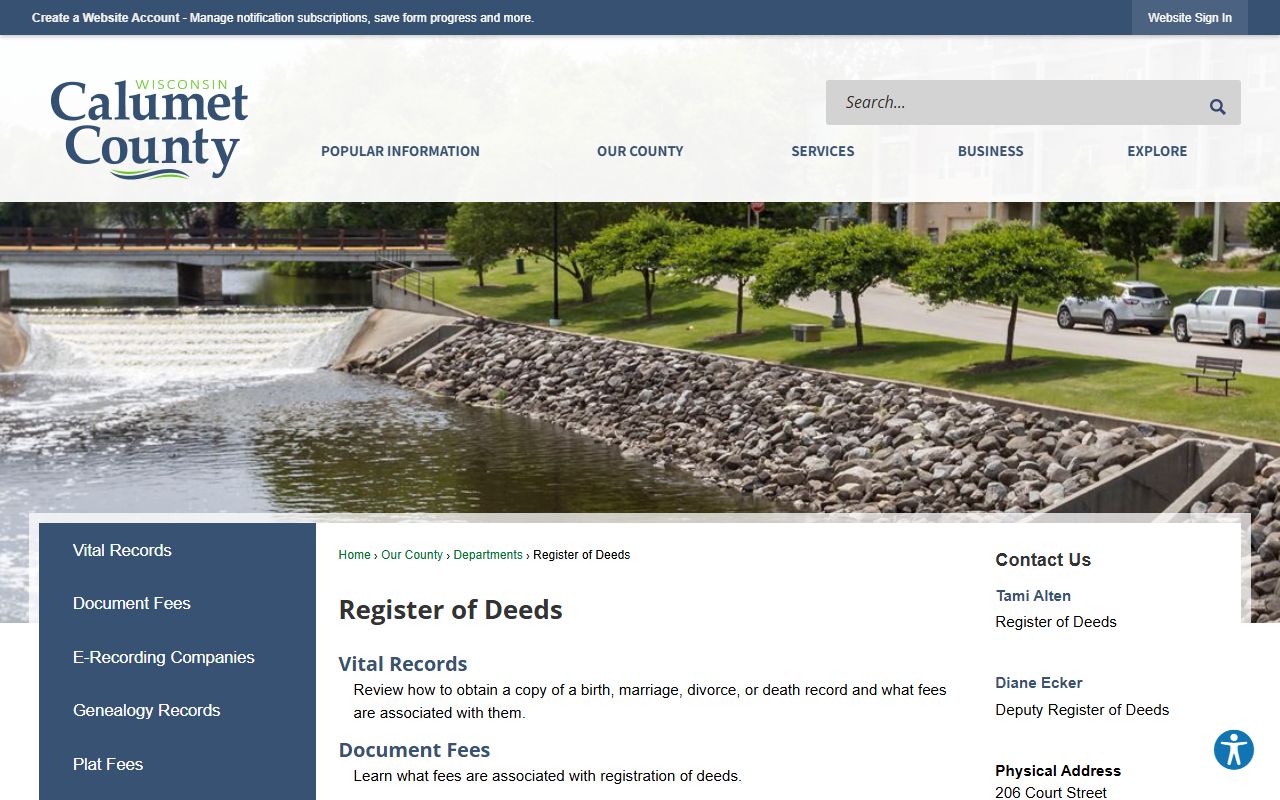
This image fits the county because the office holds the record books that anchor the search.
The manifest links the Calumet County Historical Society image to the historical society page, which is a local lead but not the main research engine.
It still helps as a local signal when you need family memory, place names, or a quick history clue.
The manifest links the WSGS Calumet County image to wsgs.org/calumet, which is a cleaner county-level guide than a generic search result.
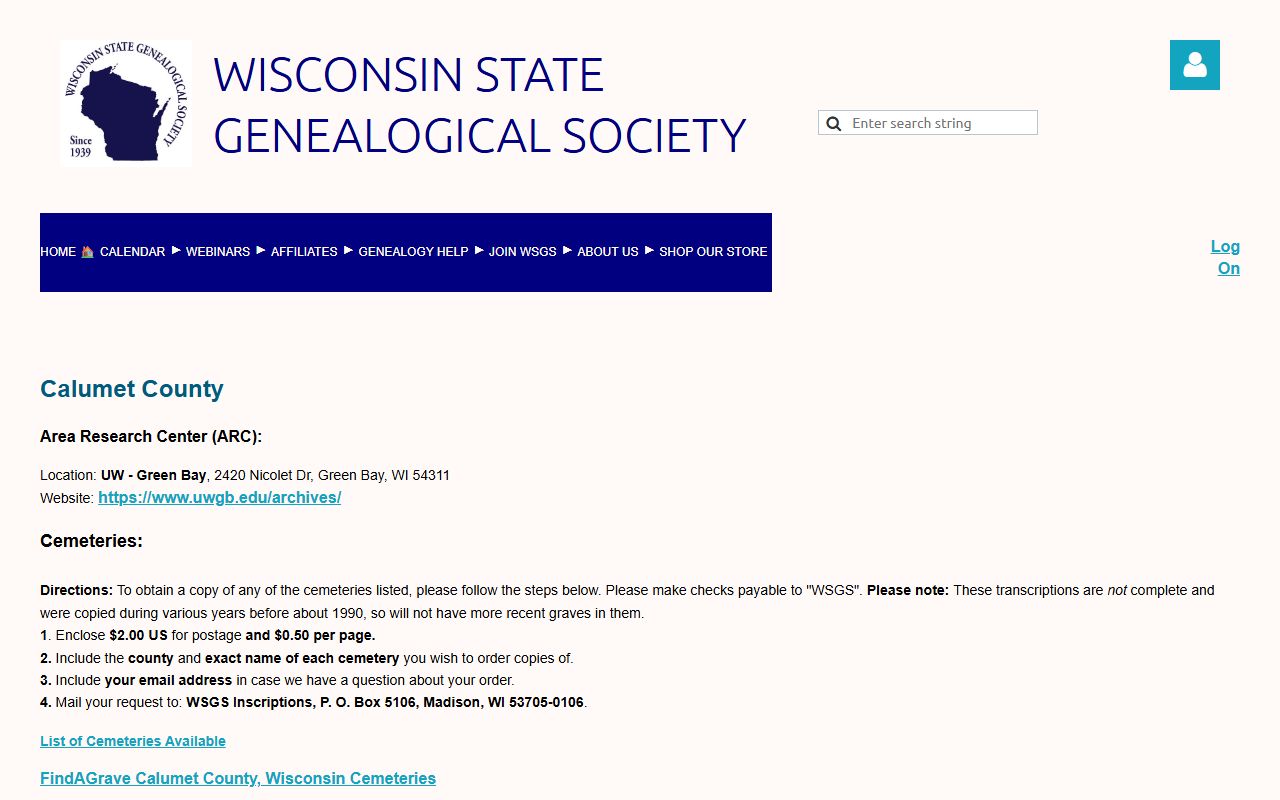
That guide is useful when you want a county-specific research path that stays tied to Wisconsin genealogy work.
Calumet County Genealogy Help
The UW-Green Bay archives are one of the best helpers for Calumet County genealogy. The archive set includes citizenship records from 1850 to 1955, civil case files from 1850 to 1971, divorce files from 1952 to 1976, criminal cases from 1852 to 1910, guardianship files from 1879 to 1971, and land and tax rolls from 1849 to 1980. That makes the archive useful when a county index gives you a name but not enough context. A single case file can do the work of several short searches.
Local history help is available too. The Calumet County Historical Society is a useful local lead for history and genealogy, even if it is not the strongest archival source in the batch. Use it as a pointer, then move back to the county office or the regional archive for the record itself. That is the right way to use a lighter source. It can suggest a name or place, but the county record still has to do the proof work.
For broader support, the Wisconsin State Law Library, Wisconsin Historical Society, Wisconsin DHS Vital Records, and Wisconsin Circuit Court Access all help when the county file needs a state-level check. BadgerLink is also useful for newspaper and database access, while the National Archives at Chicago and BLM General Land Office Records help when family lines move into federal records.
Note: Calumet County's in-office rules are strict, so bring ID and a short request list before you plan a research visit.
Calumet County Genealogy Access
Calumet County is a strong county for genealogy work because it gives you both older record books and later statewide certificate access. The trick is to know which office owns which date range. If your clue falls before the statewide line, start at the county office. If it falls after the statewide line, check the later certificate path first and then confirm the county file only if needed. That keeps the search clean and avoids overlap.
The county research rules also tell you how to prepare. You need a photo ID, a signed agreement, and a calm request. Pens, markers, cameras, and children under 12 are not allowed in the research area. That may sound strict, but it protects the records and keeps the search focused. A short list of names and dates is the best thing you can bring.
For questions about what records are public or how to frame a request, the Wisconsin State Law Library is the cleanest support source in the set. It works better than a generic legal site because it ties research questions back to Wisconsin rules and public access. That matters when a genealogy search turns from a simple copy request into a deeper record question.
Calumet County Genealogy Next Steps
Begin with the county record that matches the clue you already have. Birth, marriage, and death requests belong at the Register of Deeds. Land and long property trails belong there too. If the family line needs court, guardianship, or citizenship context, move to the UW-Green Bay archives. If the search is broader than one county file, add the state historical tools and the statewide certificate office so the family line stays intact.
Calumet County genealogy works best when you think in layers. The county gives you the base record. The archive gives you the older case file. The state gives you the backup copy or the wider index. That sequence is simple, but it keeps the work accurate. It also helps you avoid treating a single certificate as the whole story when there is more paper behind it.