
Buffalo County Genealogy Records
Buffalo County genealogy research begins with the county record books, but it works best when you also use the county clerk, a local history group, and the regional archive network in La Crosse. The county has long vital records, burial records, and land records that help families move from one generation to the next. If you are trying to prove a marriage line, trace a farm, or find a burial place, Buffalo County gives you enough record depth to build a steady search path. The key is to start with the office that matches the clue you already have.
Buffalo County Genealogy Overview
Buffalo County Genealogy Records
The Buffalo County Register of Deeds is the core office for Buffalo County genealogy. It records birth records from 1855, marriage records from 1856, death records from 1873, burial records, and land records from 1854. That spread covers most of the family trail a researcher needs. A birth record can name parents. A marriage entry can lock in a spouse. A deed can place a family on a road, a ridge, or a river valley lot. Those pieces often work better together than they do on their own.
Use the office page at Buffalo County Register of Deeds when you want the official source. The office is at 407 South Second Street in Alma and records real estate documents, issues vital records, and maintains military discharge records. It also notes that it cannot prepare documents or provide legal advice, which is a useful boundary to know before you visit. That leaves the office free to do what it does best: keep the county record trail clear and indexed.
For Buffalo County genealogy, that means you can start with a name, then move through records that show family growth and property change. Burial records can help when a death certificate is missing. Land books can help when a family name shifts from one spelling to another. The record set is simple, but it is strong.
Note: Buffalo County staff can issue records, but they will not draft documents or act as legal counsel, so bring a clear request when you visit.
Buffalo County Search Tips
Buffalo County genealogy searches go faster when you keep the request narrow. Write down the name, the date span, and the record type you want before you call or visit. If you are asking about a marriage, the county clerk can be useful because marriage licenses are part of its work. If you are looking for a birth or death entry, the Register of Deeds is the better start. Matching the office to the clue keeps you from wasting time.
The county clerk page at Buffalo County Clerk is worth a look when a marriage line matters. The office is at the same Alma address, which makes it easy to connect one request with another. In a county like Buffalo, where families sometimes appear in both farm and river community records, one office visit can answer more than one question if you arrive prepared.
Before you search, gather these basics:
- Full names and maiden names when known
- A year or two on either side of the event
- A township, village, or river community clue
- Any burial, marriage, or land detail you already trust
With those facts in hand, Buffalo County genealogy work becomes much easier. You can walk into the right office with a smaller target and leave with a stronger record trail.
The county clerk image in the manifest comes from buffalocountywi.gov/191/County-Clerk.
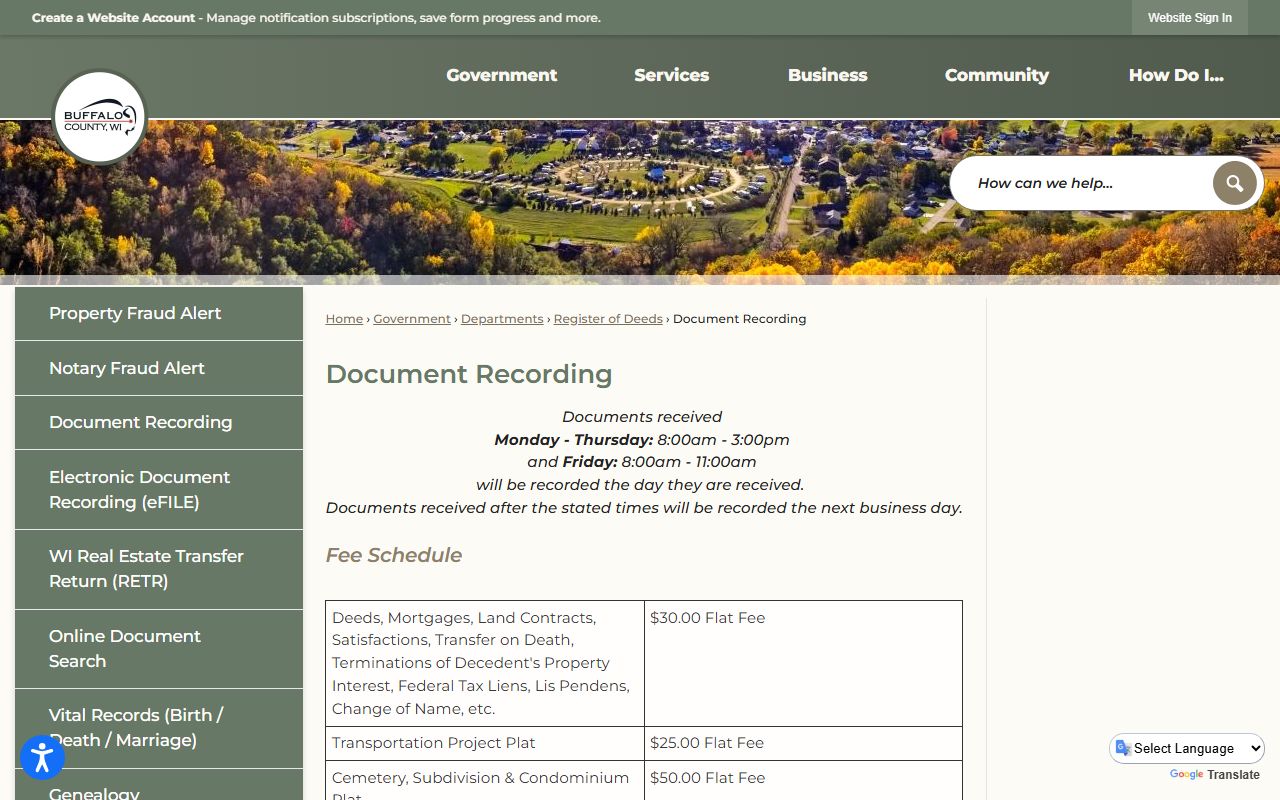
This image matches the clerk office that can help with marriage license work and related county research questions.
Buffalo County Genealogy History
The Buffalo County Historical Society can add local shape to a family search. Its social page is a simple lead, but it can still point you toward names, events, and county stories that do not show up in a short index. For Buffalo County genealogy, that kind of local lead matters when a family line stays tied to the same valley, bluff, or river landing for years. History groups often know the context that a record book leaves out.
See the society at Buffalo County Historical Society. That page is not a formal archive, but it can still support a local search when you need a starting point. Use it with care and pair it with the county office records, because the office files are the part that anchor the search. The history page is the place to look for clues, not the place to stop.
The historical society image in the manifest comes from facebook.com/BuffaloCountyHistory.
The image fits the county because many Buffalo County family details are still best learned through local memory and community leads.
The county also works well with the Area Research Center Network / La Crosse archives. That regional site serves Buffalo County through Diocese of La Crosse archives resources and history listings. It is a strong next stop when you need newspapers, church material, or broader local history context.
Buffalo County State Support
When the county record set is not enough, state tools can fill in the gap. The Wisconsin Historical Society is useful for older family material and research context. FamilySearch Wisconsin can help you map the county record timeline, and BadgerLink is helpful when a newspaper or database search is the fastest way to confirm a name.
For land and court follow-up, BLM General Land Office Records and Wisconsin Circuit Court Access can help you follow a surname beyond the county register. If you need a statewide vital-record check, the Wisconsin DHS Vital Records office is another path, and the Wisconsin State Law Library can help when a genealogy search reaches into probate records or public-record access questions.
The regional archive image in the manifest comes from archives.lacrosselibrary.org.
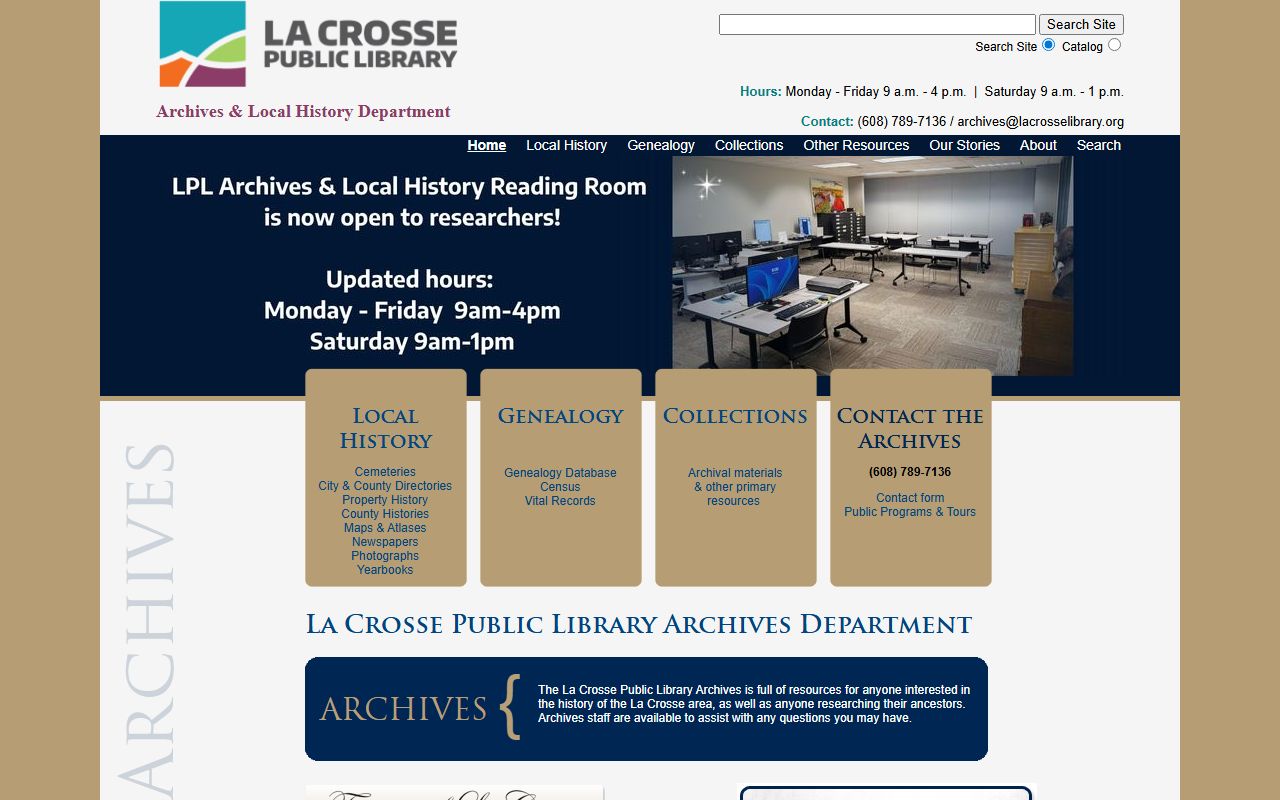
This archive image belongs here because Buffalo County often needs a regional search path, not only a courthouse visit.
Note: Buffalo County genealogy work is strongest when you combine the courthouse record, the county clerk, and the La Crosse regional archive instead of treating them as separate searches.