
Bayfield County Genealogy Records
Bayfield County genealogy research starts with a few strong local offices and grows best when you mix vital records, land records, and nearby archives. The Register of Deeds keeps the core county record set, while the Bayfield Heritage Association and the Bayfield County Historical Society help fill in family lines, place names, and old ownership trails. If you are tracing a surname, looking for an old marriage entry, or trying to connect a farm to a family, Bayfield County gives you both official records and local history help. That mix makes searches steadier and faster.
Bayfield County Genealogy Overview
Bayfield County Genealogy Records
The Bayfield County Register of Deeds is the main office for county genealogy work. Its record set reaches back to birth records from 1850 and 1879, marriage records from 1869, and death records from 1870. The same office also keeps land records from the old county books, which matters when a family stayed on the same parcel for years. That trail can show who bought a lot, when a farm changed hands, and how one branch of a family moved across the county.
The register of deeds page at Bayfield County Register of Deeds is the best place to begin if you want the official county file. The office is at 117 E Fifth St. in Washburn, and the staff can help with vital records and land questions tied to the local index. The office also notes that the Tapestry system is available for land records searching, which helps when a deed chain runs through more than one family name.
For a Bayfield County genealogy search, that mix of vital and land work is useful. A birth record can point to parents. A marriage entry can tighten a date range. A deed can show residence, heirs, or neighbors who also appear in later census pages. Start with the county office, then follow the names into local history collections and state support when the paper trail gets thin.
Note: Bayfield County research usually works best when you pair the Register of Deeds with local history groups and the northern regional archive.
Bayfield County Search Tips
Good Bayfield County genealogy searches begin with clean facts. Write down exact names, spellings, and places before you contact an office. If you are asking for a vital record, think about the date span first. If you are chasing a land trail, bring an old legal description, a tax year, or the name of a prior owner. Small details matter here because rural and lake-shore families often show up under slight spelling shifts from one source to the next.
The county office can help with records, but local researchers often save time when they pair the Register of Deeds with online land tools and nearby history groups. Bayfield County specifically notes that the Tapestry system supports land searching, which matters when you are tracking a surname tied to the same parcel for a long stretch of time. That extra land path is useful when an owner appears under more than one spelling or when several relatives held the same property over time.
Before you start, bring these basics:
- Full names with alternate spellings
- Approximate years for birth, marriage, or death
- A town, township, or shoreline place name
- Any land description, deed book clue, or family witness name
Once you have those points, Bayfield County genealogy research becomes much more precise. You are not guessing at random. You are matching one clue to the next and letting the county record set guide the next step.
Bayfield County Genealogy Archives
The Bayfield Heritage Association is a strong next stop for Bayfield County genealogy. Its local history archives and research help are useful when family stories mention a bay village, a fishing camp, or a lot that stayed in one line for decades. The association can also help with property research, which is often the key to finding prior owners and linking a house site to a family name.
The association page at Bayfield Heritage Association gives you a local path into community memory. That pairs well with the Bayfield County Historical Society, which includes multiple local chapters such as Barnes Area, Cable/Namakagon, Cornucopia, Drummond, Eileen Area, Mason Area, Oulu, Port Wing, Washburn Area, and Western Bayfield County. Those chapters matter because Bayfield County is spread out, and family papers often sit close to the place where people lived, farmed, or worked on the water.
The historical society page is worth a close look when a surname turns up in a small settlement or a church community. A local chapter may know a cemetery row, a photo set, or a family cluster that does not appear in a county index. That is the kind of detail that turns a loose name into a full Bayfield County genealogy line.
The image below comes from the Bayfield County Historical Society listing in the manifest at bayfieldcountyhistory.org.
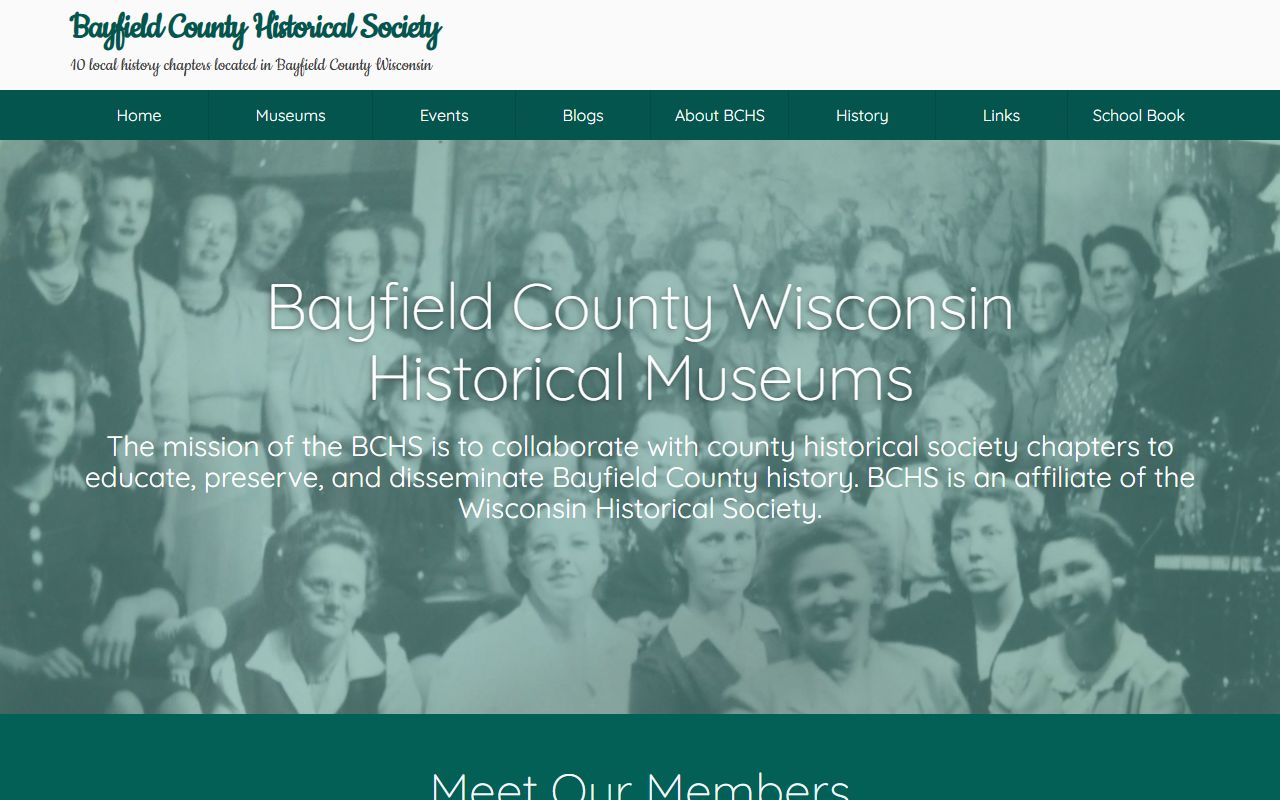
The society image fits the county well because Bayfield research often depends on local chapter memory as much as on formal record books.
Bayfield County Genealogy Research Center
The Northern Great Lakes Visitor Center History Center and Archives serves Bayfield County and seven other northern counties. That makes it one of the most useful regional stops for Bayfield County genealogy when the local office is thin or when a family moved across county lines. Its collections include citizenship records, pre-1907 vital statistics, microfilm newspapers, Native American census rolls, court records, tax records, and Ancestry access. Those sources can bridge the gap between county office entries and the older paper trail that families leave behind.
For a closer look, visit Northern Great Lakes Visitor Center History Center and Archives. The archive hours run Tuesday through Friday from 1:00 to 4:30 PM and by appointment. If you are working on a Bayfield County genealogy case that reaches into northern lake country, this regional collection can save time and reduce guesswork. It is especially useful when you need a newspaper item, a court note, or a citizenship clue that does not sit in the county office.
The center also helps when you need to pull different record types together. A birth index, a tax record, and a newspaper mention may all point to the same family. That is often enough to move a line forward when a county record has a gap.
The first Bayfield County image in the manifest comes from the Register of Deeds listing at bayfieldcounty.org/departments/register-of-deeds.
This Register of Deeds image matches the county office that handles the core birth, marriage, death, and land trail.
Bayfield County State Resources
When Bayfield County records run out, state resources can help keep the search moving. The Wisconsin Historical Society is the best state-level backup for older names, family files, and pre-1907 material. The BadgerLink portal can help with newspaper access and family-history databases, while FamilySearch Wisconsin gives you a broad guide to record types and county pathways.
Land work also benefits from statewide tools. BLM General Land Office Records can show early federal land activity, and Wisconsin Circuit Court Access can help with court-related follow-up when a surname appears in probate or other circuit records. If you need broader public-records or probate context, the Wisconsin State Law Library is the stronger support source in the research set because it ties genealogy-related research questions back to Wisconsin record access and probate materials.
Note: Bayfield County genealogy work is strongest when you combine local deed books, the heritage association, and the northern archives instead of relying on a single index.