
Search Oshkosh Genealogy
Oshkosh genealogy research works well when you treat the city as a layered record system. The Winnebago County Register of Deeds handles certified vital records, UW Oshkosh Archives adds court and naturalization depth, and the Oshkosh Public Library brings city directories, cemetery indexes, newspapers, maps, and name-change clues together in one local history setting. That mix helps you move from a certificate to a household, then from a household to a neighborhood. Start with the record type you already know, then use the Oshkosh repositories to confirm the line, check the date, and place the family in the city with more confidence.
Oshkosh Genealogy Records
The Winnebago County Register of Deeds is the official county office for Oshkosh genealogy vital records. It sits at 112 Otter Avenue, Room 108, and provides certified copies of birth, death, marriage, and divorce certificates. The office notes that statewide births and marriages are available from October 1, 1907 to the present, while Winnebago County death records are available prior to September 1, 2013 and statewide after that date. Divorce certificates are available only from January 1, 2016 onward, with earlier divorces at the Clerk of Courts. The office also warns that pre-October 1907 vital records may not be available, which is an important boundary for Oshkosh genealogy.
That date line matters because older Oshkosh families often need another source once the county office reaches its limit. The county register can still give you the official copy for later events, but pre-1907 work usually needs the archives or the library. That is why Oshkosh genealogy should not begin and end at the register. The office is the right place for a certified current or later record, but the city’s historical work often starts one step earlier in an archive or directory set. The best searches move between those layers instead of assuming one office holds every answer.
UW Oshkosh Archives and Area Research Center adds the older and more complex record trail. Its Genealogy Records Index Search is available online, and the archives hold court records, family and probate court records, naturalization records, and C.W.A. appraisal cards. The court and naturalization files date from the 1840s through the 1970s, which makes the archive valuable for older Oshkosh genealogy and family migration work. Those records can explain how a family moved into the city, how it held property, or how a name changed after a legal event.
The Oshkosh Public Library local history collection rounds out the city’s source network. It offers a strong genealogy collection, city directories, cemetery indexes, newspapers on microfilm, plat maps, fire insurance maps, Ancestry Library Edition, and information on 1957 street name changes and house renumbering. That is exactly the kind of local history support that turns a name into a location. For Oshkosh genealogy, those maps and directory runs can be just as important as a certificate because they show where a family lived and how the city labeled that street at the time.
Note: Oshkosh genealogy works best when the county office handles the official copy, the archive handles older court material, and the library handles neighborhood context.
Oshkosh Genealogy Search Tips
Start with the record boundary before you start the search. If the event is after October 1, 1907 for birth or marriage, the Winnebago County Register of Deeds can often provide the certified copy. If it is older than that, or if you need a court or naturalization trail, move quickly to UW Oshkosh Archives. Oshkosh genealogy is much easier when you know which office fits the date range, because the county office and the archive serve different parts of the family story.
The public library is especially valuable when a family line shifts address or street name. The 1957 street name changes and house renumbering resources can solve a problem that a simple certificate cannot. City directories and cemetery indexes can also connect a surname to a block, a burial place, or a year that does not appear anywhere else. That kind of local history work is often what takes Oshkosh genealogy from a partial guess to a solid family line.
Bring these details with you when you search Oshkosh genealogy:
- Full names and common spelling changes
- A year or short date range
- A street, cemetery, court, or family clue
- The record type you need first
- Whether the event falls before or after 1907
That information keeps the search on the right track and prevents wasted time in the wrong office.
Oshkosh Genealogy Images
The manifest links the Winnebago County Register of Deeds image to the county vital records page, which is the official county starting point for Oshkosh genealogy.
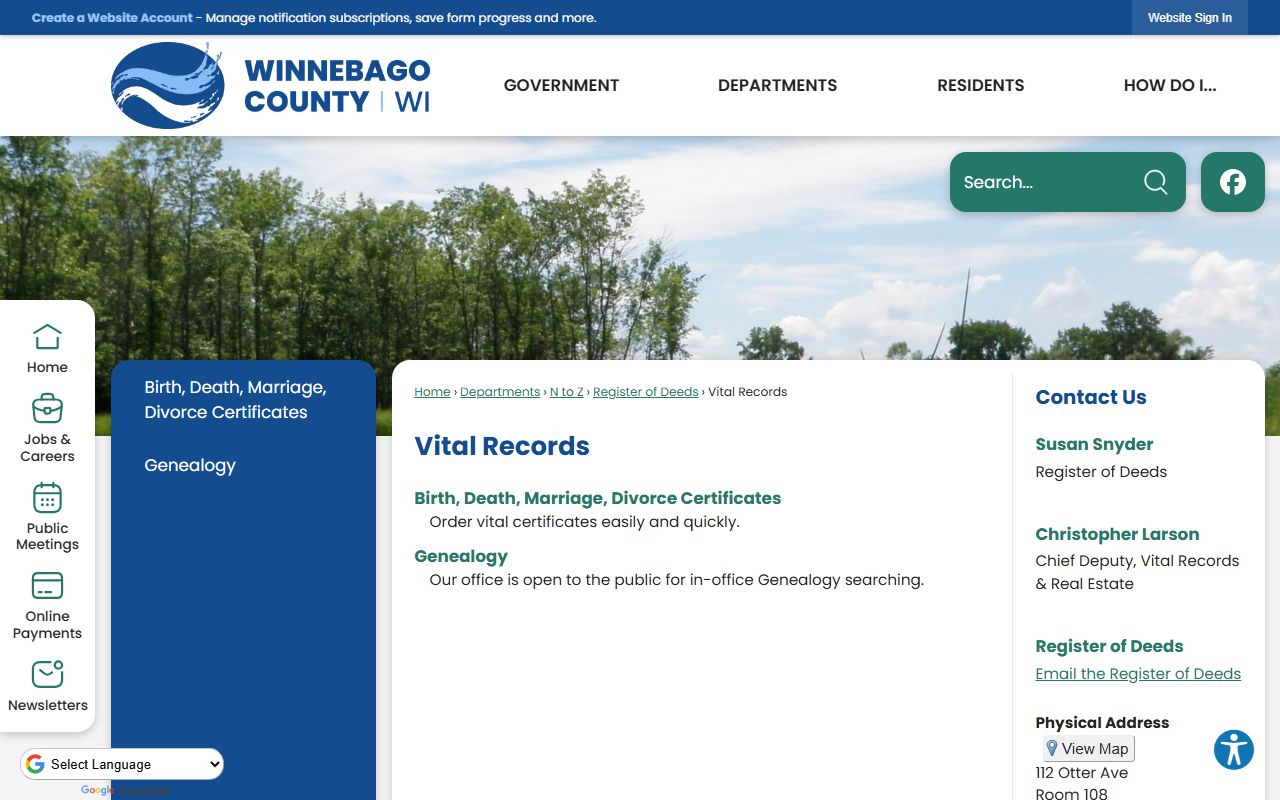
This image fits Oshkosh because the register is the place to request the later certified vital copies.
The manifest also links the UW Oshkosh Archives image to the archives court records page, which is the strongest older record source for Oshkosh genealogy.
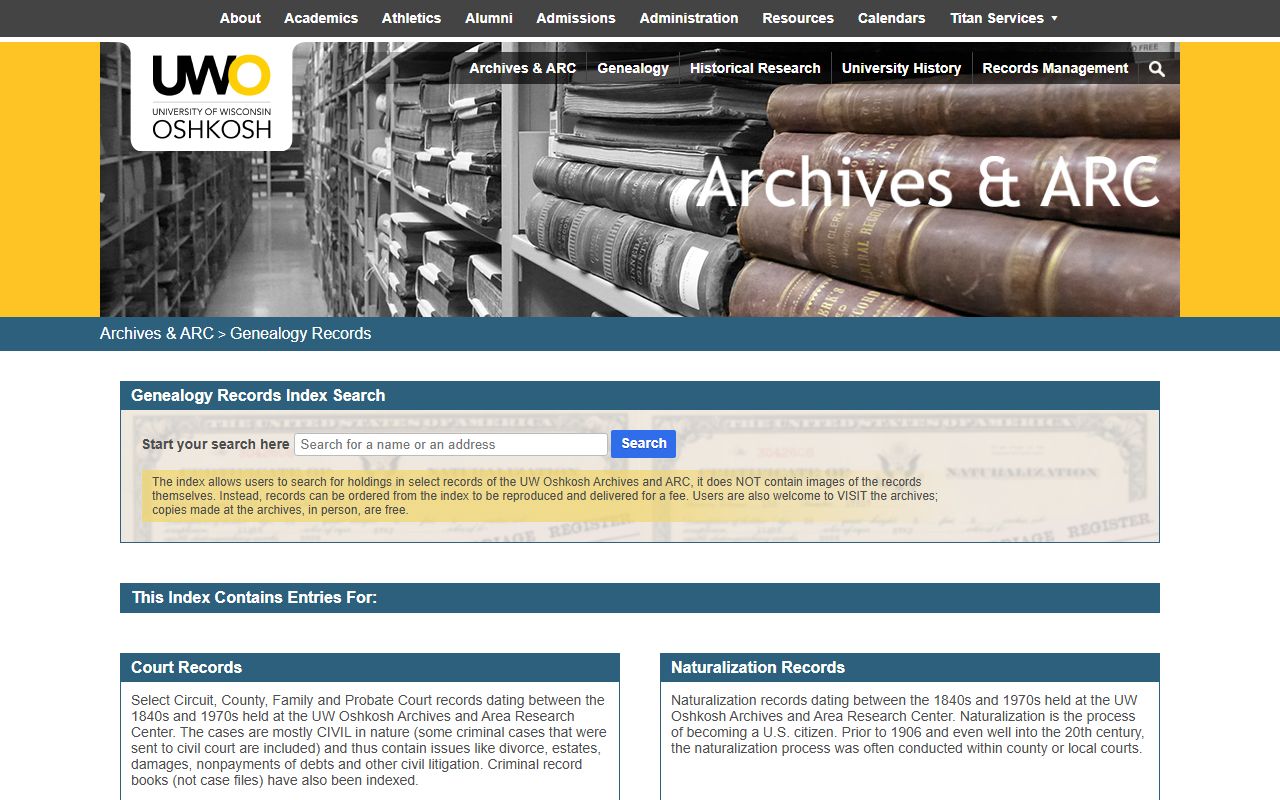
That view belongs here because the archive holds the older court and naturalization trail that the county office may not cover.
The manifest links the Oshkosh Public Library image to the local history page, which is the best city-level research aid for address, directory, and cemetery work.
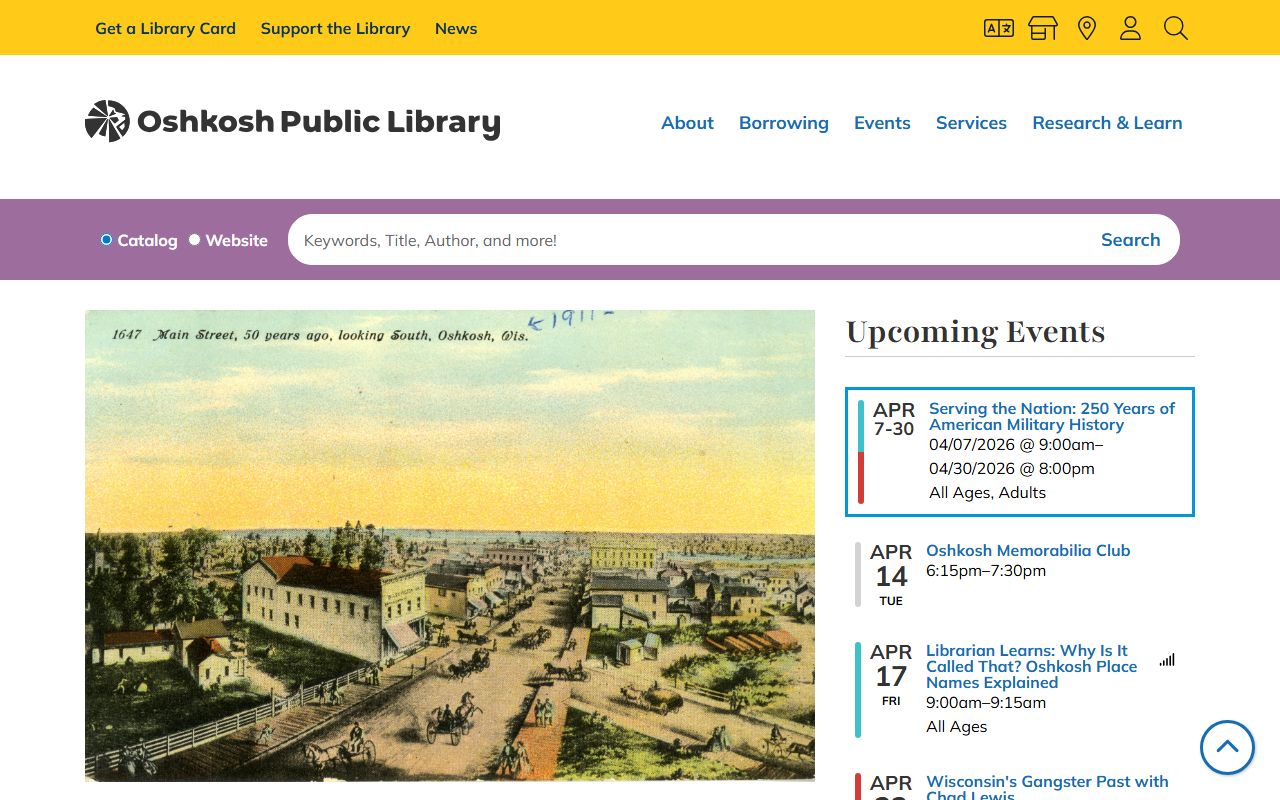
This image fits Oshkosh because the library helps turn a family name into a street, a burial site, or a city directory entry.
Oshkosh Genealogy Help
UW Oshkosh Archives and Area Research Center is the strongest help point when a family line needs court, probate, or naturalization context. The Genealogy Records Index Search gives researchers a way to begin online, and the older court material can add the legal detail that a later county copy cannot show. For Oshkosh genealogy, that kind of archive support matters because the city’s older families often move through court, land, and naturalization records before they appear in a modern vital search.
The Oshkosh Public Library is the best place to build the local setting around that record trail. City directories, cemetery indexes, maps, and newspaper film can show how a family moved through the city over time. The 1957 street name changes and house renumbering notes are especially useful if an address has shifted in later sources. A good local history clue can save hours because it tells you where to look before you order the wrong record.
For broader support, the Wisconsin Historical Society is useful when Oshkosh genealogy needs older state context, while BadgerLink can help with family history databases and research tools. The Wisconsin State Genealogical Society is another good support source for surname and method help, and Wisconsin courts is worth using when a family line leads into a broader court search. Those sources are best used after the city repositories have narrowed the name, the place, and the date.
Oshkosh Genealogy Access
Oshkosh genealogy access is straightforward once you match the repository to the record type. The county register handles later certified vital copies. UW Oshkosh handles older court and naturalization material. The public library handles local history detail, directories, maps, and address changes. That division is useful because it keeps the search organized and stops you from expecting one office to cover every era. In Oshkosh, a good search often moves from a certificate to a directory, then from a directory to a court or archive file.
The city’s record trail also reflects boundary change. If a family event happened before October 1, 1907, the county office may not have the answer. If a street name changed in 1957, the library can help translate the older address into the modern one. Those are the kinds of details that keep Oshkosh genealogy honest. They also explain why local history sources are not extra. They are part of the proof path when the county record is only one piece of the story.
Keep these items ready before you search:
- Exact names and spelling variants
- A year or short date span
- A street, cemetery, court, or family clue
- The record type you want first
- Whether the event falls before or after 1907
That preparation gives the county office, the archive, and the library a much better starting point.
Note: Oshkosh genealogy is strongest when you let the library explain the city and the archive explain the older record trail.
Oshkosh Genealogy Next Steps
Use the Winnebago County Register of Deeds for later certified vital records and official copies. Use UW Oshkosh when the family line needs older court, naturalization, or probate context. Use the Oshkosh Public Library when the search needs a street, directory, cemetery, or newspaper clue. That path is practical, and it fits the way Oshkosh genealogy usually develops from a certificate into a fuller household picture.
If the family line crosses into another county, keep following it instead of stopping at the city line. Oshkosh genealogy often gains clarity when a house number, a map, or a court file shows how the family moved. Once those pieces line up, the city story becomes much easier to trust and easier to document.