
Search Manitowoc Genealogy
Manitowoc genealogy research works well because the city has several strong local sources that each cover a different part of the family trail. The city clerk handles official city records, the county register provides vital copies, the public library offers local history indexes and newspapers, and the county historical society adds land, immigration, cemetery, school, and business material. UW-Green Bay archives give the county a regional repository layer. That mix matters because Manitowoc families often appear in local books, church records, city directories, and civil records in different forms. Start with the record type you know, then move through the city and county sources in a steady order.
Manitowoc Genealogy Records
The Manitowoc City Clerk's Office is the city record point for Manitowoc genealogy when you need official city records, voter registration, municipal court coordination, or a city liaison for local paper trails. Even though it is not a vital records office, it still matters because city documents can anchor a household to a place and a date. Manitowoc genealogy often starts with a city clue like an ordinance reference, an election item, or another official record that helps narrow the family’s position in the city.
The Manitowoc County Register of Deeds is the official county vital records source. It issues certified copies of birth, death, and marriage records and accepts both in-person and mail requests. The research file also notes photo ID or mail alternatives, cash or money order details, and same-day mailing. Online ordering is available, but the page does not need to be overbuilt around a service brand. For Manitowoc genealogy, the important point is simple: the county register is the place to confirm the official vital copy once the local history sources have narrowed the date and the household.
Manitowoc Public Library is one of the best local history tools in the city. Its genealogy and local history collection includes local history books and indexes, newspapers on microfilm dating back to the 1850s, census records from 1836 to 1930, pre-1907 vital indexes, later birth, death, marriage, and divorce indexes, city and county directories, plat books, and church records. That makes the library a major starting point for Manitowoc genealogy because it can connect a family to a year, a neighborhood, and a record type before you request an official copy.
The Manitowoc County Historical Society adds a deep archival layer. Its archives and research materials include plat books for family-owned land, immigration dates and declarations from 1848 to 1929, cemetery lists, Civil War veteran biographies, compiled village and town histories, church records, city and county directories beginning in 1864, one-room school materials, early newspapers, local business records, donated scrapbooks, and oral histories. That kind of source range is especially useful when a Manitowoc family line needs more than a civil certificate. The historical society can show how the family fit into the county over time.
UW-Green Bay Archives also serves Manitowoc County as part of the regional repository network. That makes it useful when a Manitowoc genealogy search needs a wider archival lane or when another county in the regional network might be part of the family’s path. The city has enough sources to support both local and regional work, which is why the search often gets better after the first record turns up.
Note: Manitowoc genealogy is strongest when the city clerk, library, historical society, county register, and regional archive are used as one connected trail.
Manitowoc Genealogy Search Tips
Start by deciding whether the clue is civil, local history, or archive based. If you need an official vital copy, the county register is the right place. If you need newspaper, directory, or pre-1907 index work, the public library may be the faster opening stop. If you need land, immigration, cemetery, or school material, the historical society is often the stronger fit. Manitowoc genealogy works best when the source matches the record type from the start.
The library’s pre-1907 vital indexes and later indexes are especially important because they can show a family line before the official copy is ordered. Newspapers on microfilm, church records, and plat books can then place the family on a street or in a township. The historical society adds immigration dates, declarations, and oral histories, which are useful when a surname appears in several forms. Those records can carry Manitowoc genealogy from a narrow index hit to a documented local family line.
Useful search details for Manitowoc genealogy include:
- Full names and likely spelling variants
- A year or short date range
- A church, school, cemetery, or land clue
- The record type you want first
A precise request helps the library, county office, and historical society move straight to the best source.
Manitowoc Genealogy Images
The manifest links the city clerk image to the Manitowoc City Clerk page, which is the city office behind official local records.
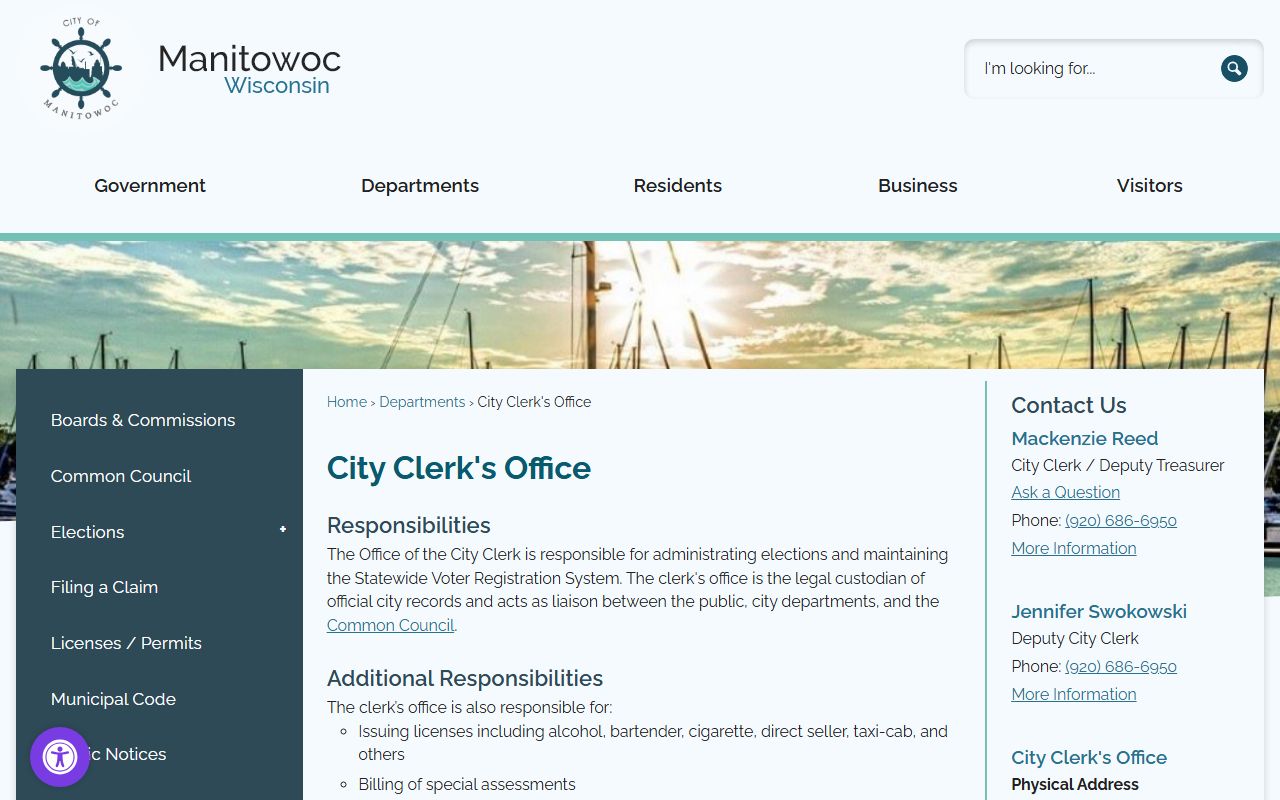
This image fits Manitowoc because city records are often the first clue that leads to a fuller family search.
The manifest also links the county register image to the Manitowoc County Register of Deeds vital records page, which is the official county copy source for Manitowoc genealogy.
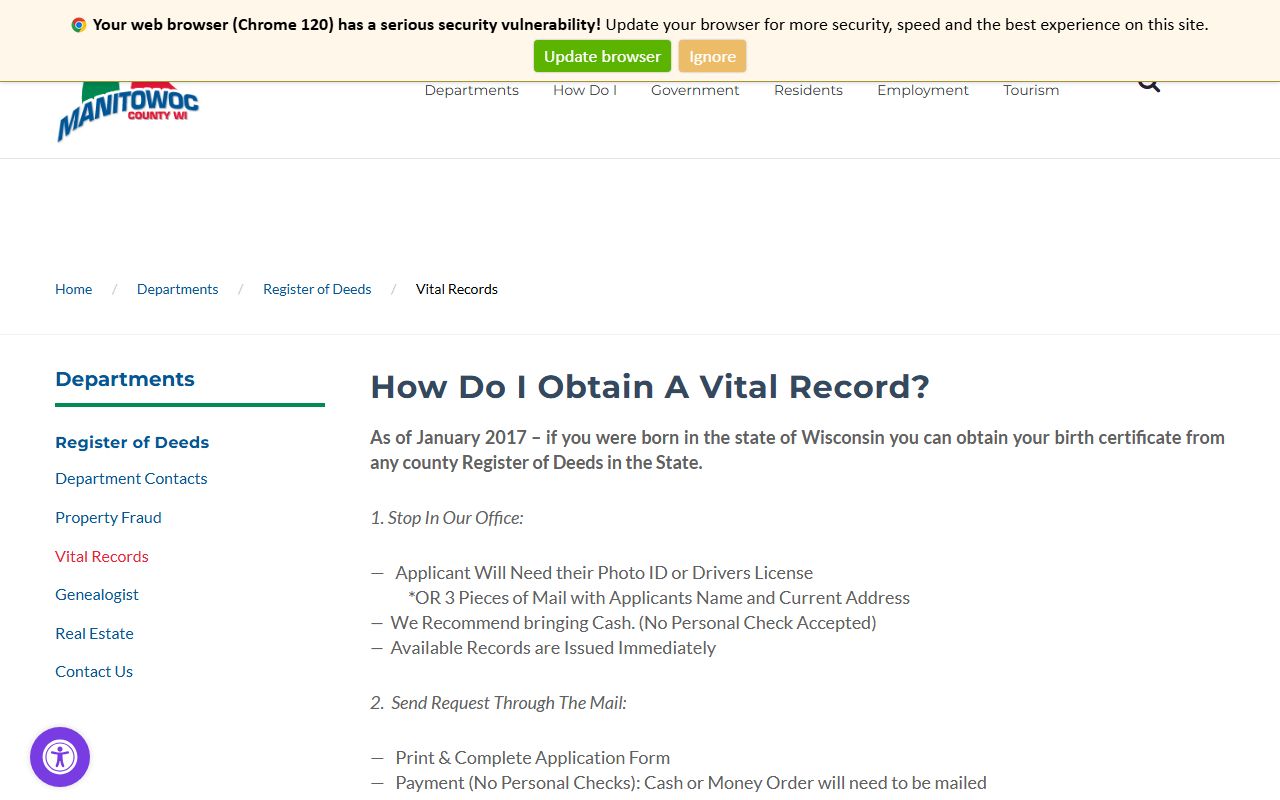
That view belongs here because the county office confirms births, deaths, and marriages after the local clues point the way.
The manifest links the public library image to the Manitowoc Public Library genealogy and local history page, which is one of the city’s strongest family history tools.
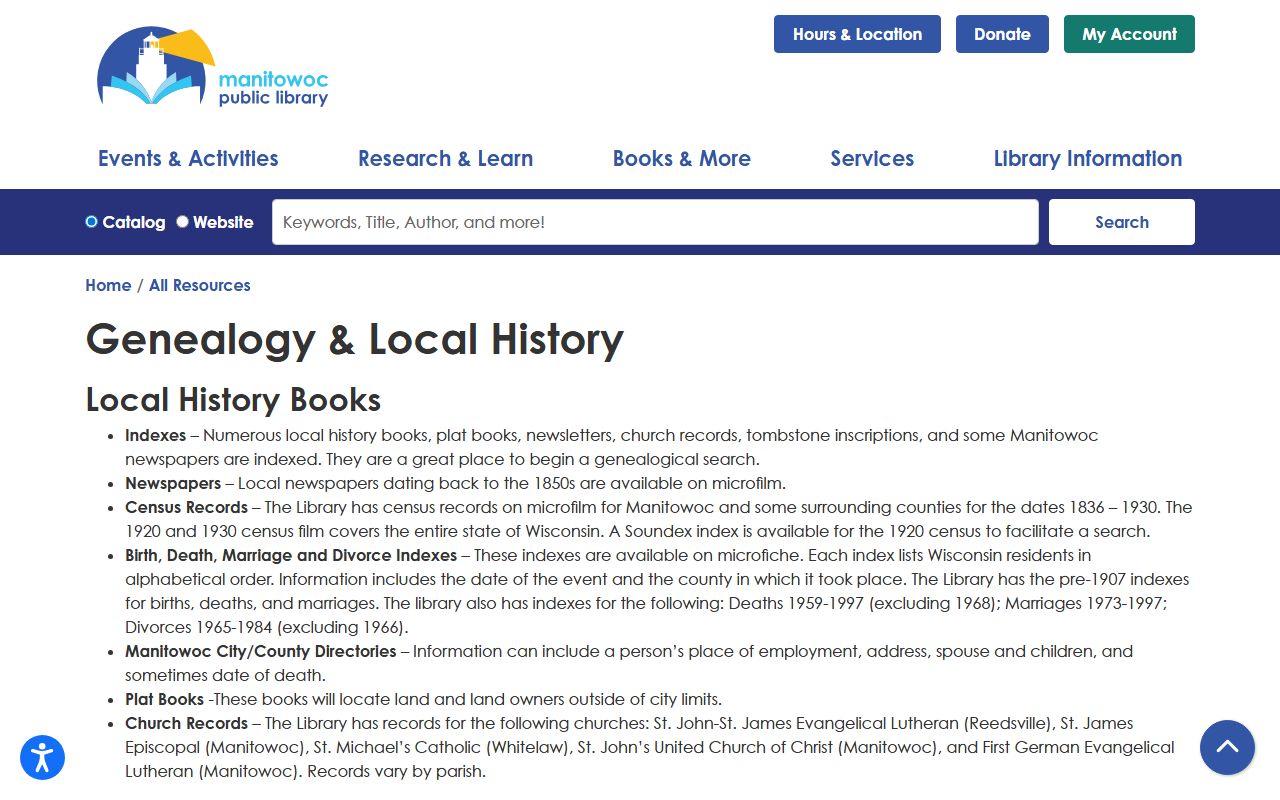
This image fits Manitowoc because the library’s indexed local history and newspaper material often supplies the clue that makes the rest of the search work.
Manitowoc Genealogy Help
The Manitowoc County Historical Society is the best help point when the search needs land, immigration, cemetery, school, or business context. Its archives include a large mix of records and local history material, which makes it useful when a family line needs to be placed in the county rather than just confirmed by a certificate. Manitowoc genealogy often improves once a researcher can see how a surname moved through a village or township.
Manitowoc Public Library is the practical everyday helper. It can connect a family to old newspapers, church records, plat books, and the pre-1907 and later indexes. That means the library can often narrow the search before the county register is contacted. UW-Green Bay archives are a useful backstop for broader regional work, especially when a family line crosses county lines or requires an archival source beyond the city. Together, those sources make Manitowoc genealogy more complete and more reliable.
For broader support, the Wisconsin Historical Society, BadgerLink, Wisconsin State Genealogical Society, and Wisconsin courts are useful when the Manitowoc line reaches into older state, newspaper, or court material. Those sources help most after the local collections have narrowed the date and the household.
Manitowoc Genealogy Access
Manitowoc genealogy access is flexible because the city offers both city-level and county-level paths. The city clerk can help with official city records and local administrative references. The library handles local history and indexing work. The historical society handles archives and deep research materials. The county register provides the certified vital copy. That gives researchers a clear path from clue to confirmation.
The county register’s mail and in-person options are useful when you cannot visit in person. The same-day mailing note in the research file suggests that requests can move quickly when they are complete. That matters for Manitowoc genealogy because some lines need a civil copy before the rest of the story can be checked. A clean request, a good date range, and the right office choice make the process much smoother.
Keep these items ready before you search:
- Exact names and common spelling shifts
- A year or short date range
- A church, school, cemetery, or land clue
- The record type you want first
That small prep work keeps the county and local sources focused on the right family line.
Note: Manitowoc genealogy is strongest when the public library frames the search, the historical society expands it, and the county register confirms it.
Manitowoc Genealogy Next Steps
Begin with the public library when you need a local history clue, index hit, or newspaper trail. Move to the historical society when the search needs land, immigration, cemetery, or school material. Use the county register when you need a certified vital record. Add the city clerk when a city administrative record or official notice is part of the trail. That order keeps Manitowoc genealogy practical and avoids asking the wrong source first.
Once the record is in hand, the city becomes easier to read. A directory can point to a street, a church record can point to a family, and a local history book can explain the neighborhood context. Manitowoc genealogy works best when each source is allowed to do the job it does best.