
Search Kenosha Genealogy
Kenosha genealogy research works best when you use the city’s archive, library, and county record paths together. UW-Parkside Archives and the Kenosha Public Library both hold material that helps place families in the city, while the county Register of Deeds can confirm vital and real estate records when you need an official copy. That mix is useful for people who are tracing early settlement, a school or church clue, or a family line that appears in newspapers and local directories. In Kenosha, the best search starts with a name, a year, and a clear record type.
Kenosha Genealogy Records
The strongest city research stop is UW-Parkside Archives & Area Research Center at the University of Wisconsin Parkside Library, 900 Wood Rd., Kenosha, WI 53144. The staff can be reached at 262-595-2411 or archives@uwp.edu. Its coverage includes Kenosha and Racine counties. The archive holds pre-1907 vital records for 1906 and earlier, the Wisconsin Genealogy Index for 1852-1907, a marriage register for 1850-1853, and unofficial sources such as church sacramental records, hospital records, funeral home and cemetery records, and scrapbooks. For Kenosha Genealogy, that is a deep and practical starting point.
The archive’s Wisconsin Genealogy Index is especially useful because it includes biographical sketches, obituary references, and newspaper material that can point you to the right family group. A record can look thin in one source and rich in another. That is common here. Kenosha Genealogy often benefits from checking the archive first, then using the county and city sources to fill in names, dates, and neighborhood details.
The Kenosha Public Library genealogy resources add another layer of local help. The library offers the KCLS digital archive, county history images and texts, lost industries materials, and Kenosha County yearbooks. That combination is useful when you need to place a person at school, in a business district, or in a household that later moved out of the city. Kenosha Genealogy research often gets sharper when a directory entry or yearbook photo confirms what a vital record only hints at.
The Kenosha County Register of Deeds is another important stop for city research. Certified copies can be ordered online, and real estate documents are available online as well. That matters when a Kenosha family moved between city blocks, invested in property, or left a land trail that explains where the household lived. The register gives you the official record base, while the archive and library give you the local detail that makes the city search usable.
Kenosha Genealogy Images
The UW-Parkside Archives image ties directly to the archive that serves Kenosha Genealogy researchers.
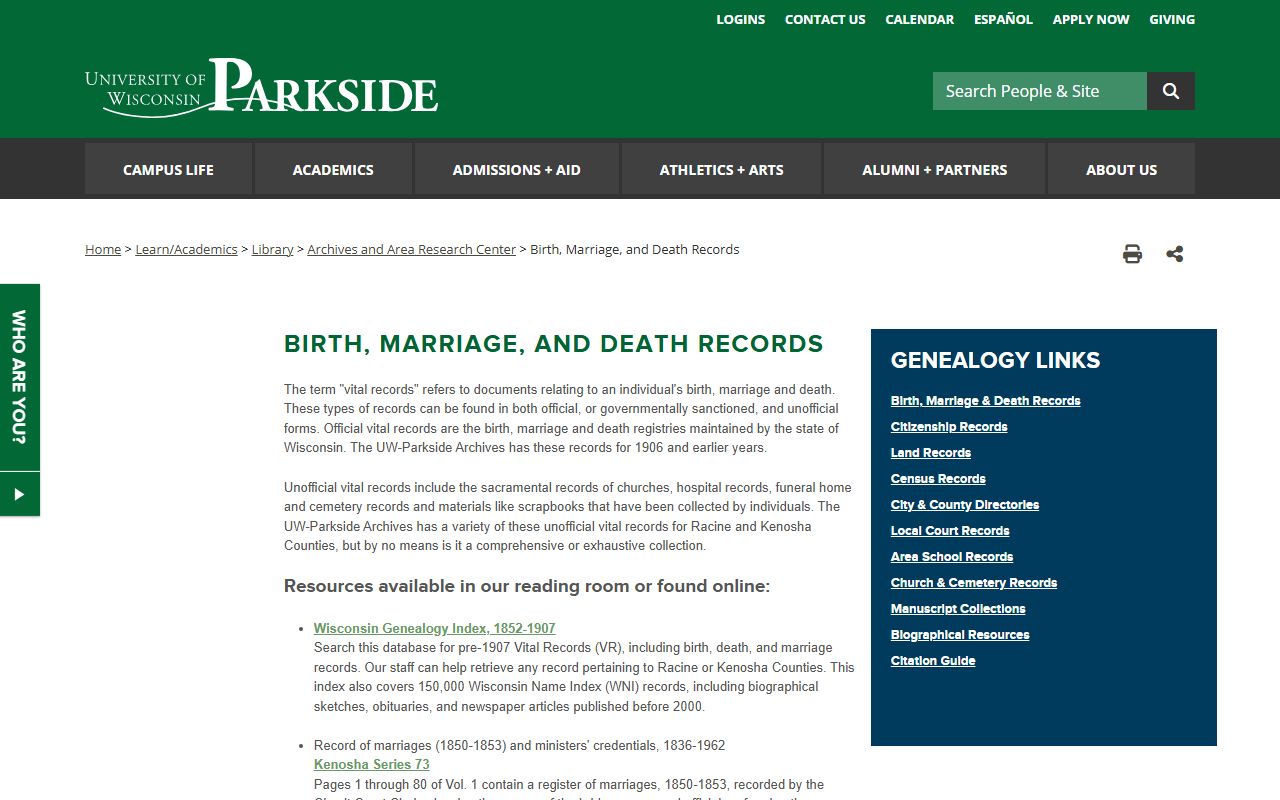
This image fits the city well because the archive holds the pre-1907 vital and index material that often opens a Kenosha family line.
The Kenosha Public Library image points to the city’s main public library genealogy resource page.
That image belongs here because the library’s digital archive, yearbooks, and county history files are often the fastest way to put a family into a Kenosha neighborhood.
The Kenosha History Center image links to the history center and county historical society resource guide.
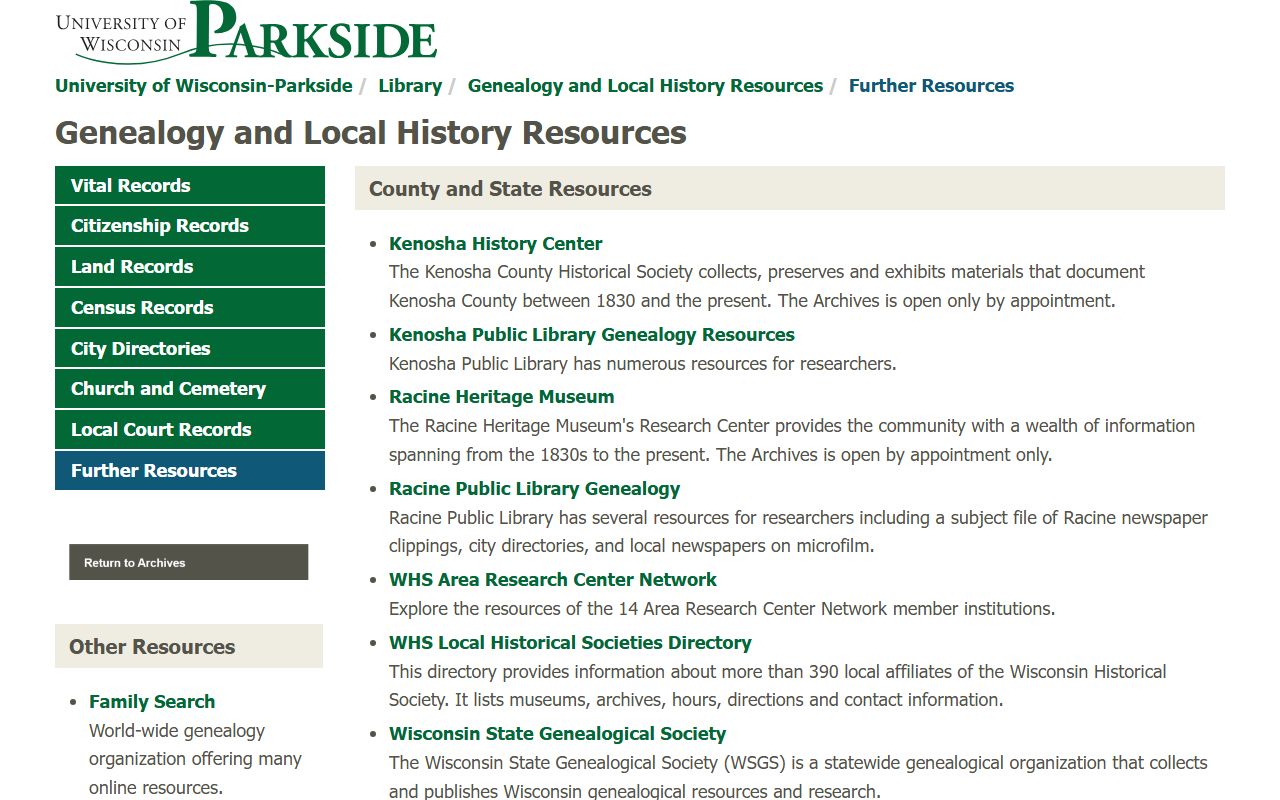
It is a strong local fit because the history center collects and exhibits Kenosha County materials from 1830 to the present and uses appointment-based archives access.
Kenosha Genealogy Help
The Kenosha History Center, reached through the UWP genealogy resources guide, is a useful companion to the archive and library. It collects and exhibits Kenosha County materials from 1830 to the present, and its archives are open by appointment only. That makes it a good place for city families that need a photograph, a scrapbook note, or a local exhibit reference to explain where the family lived. For Kenosha Genealogy, the history center often adds the neighborhood detail that formal records leave out.
The Kenosha Public Library gives researchers another kind of help. Its digital archive includes local yearbooks, historical documents for western Kenosha, and the city’s lost industries materials. Those sources help when a family worked in a plant, went to school in the city, or appears in a collection that is not indexed by name. City directories and local histories can also help you match a surname to the right block or business district, which is useful when a census line is too broad to be certain.
The county Register of Deeds fits into this same city-level research pattern. Even without a local office page link in the research set, the register remains the official source for certified copies and online real estate documents. When you combine that office with the archives and the library, Kenosha Genealogy becomes a layered search that covers vital records, property, and local memory without forcing everything through one source.
For broader Wisconsin context, the Wisconsin Historical Society and BadgerLink are worth using when local material runs thin. The historical society helps with pre-1907 records and state collections, while BadgerLink opens family history material through a statewide platform. If the city story touches a court file or a later case, Wisconsin Circuit Court Access is the better backup. That gives Kenosha Genealogy a clear path from local source to state source without losing the city focus.
Kenosha Genealogy Search Tips
Plan a Kenosha Genealogy search around the source type you already know. A family name with a year range is useful, but a school name, church name, or neighborhood clue is often better. The archive has pre-1907 vital material and a marriage register, the library has city histories and yearbooks, and the history center can point you toward county collections and exhibit material. A city search is rarely about one perfect record. It is usually about using several small records to confirm the same family in more than one place.
If you are working from outside Kenosha, call the archive before you go. The staff can tell you how to use the index and whether your request is better suited to archive material or county office work. That saves time and helps you avoid guessing at the wrong record line. It also helps to know whether you are looking for a vital record, a church reference, a funeral home clue, or a cemetery entry. Those pieces are scattered, but they are not random.
Bring these details with you:
- Exact names and spelling variants
- A year or short date range
- A school, church, business, or neighborhood clue
- A record type such as birth, marriage, death, land, or obituary
That list keeps the search efficient and gives the archive or library a real target. It also makes Kenosha Genealogy easier to move from index to source, which is the fastest way to get beyond a surface hit.
Wisconsin Genealogy Support
When Kenosha Genealogy needs a wider view, start with the Wisconsin Historical Society. Its pre-1907 vital record collection is a strong backstop when city sources do not cover the date you need. BadgerLink also matters because it gives Wisconsin residents access to family history records, select censuses, and probate material through a statewide partnership. Those resources help when a city family line moves beyond the local archive.
The Wisconsin State Genealogical Society is useful for county-by-county research guidance, especially when you need ideas on where a Kenosha name may appear next. If the city story reaches into court records, Wisconsin Circuit Court Access can help you check later cases. For older federal traces such as naturalization or military service, the National Archives at Chicago is a sensible next step. Those sources do not replace the local archive, library, or history center, but they do help complete the city picture.
Kenosha Genealogy works best when the search stays local first and grows wider only when needed. That order keeps the work focused and makes it easier to tell which source gave you the real answer.