
Search Green Bay Genealogy
Green Bay genealogy research has one of the best local support networks in the state. The Brown County Library, UW-Green Bay archives, and Brown County Register of Deeds all sit near the city, and each one covers a different part of the family story. That means one name can be checked in records, newspapers, census files, maps, and local history collections without leaving the area. Green Bay families often show up in both city and county records, so the safest way to work is to begin with the record type you know and then add the local context that helps prove it.
Green Bay Genealogy Records
The Brown County Library Local History and Genealogy Department is one of the strongest Green Bay genealogy resources. It sits on the second floor of Central Library and holds federal census records for Wisconsin from 1820 to 1930, state census sets from 1855 through 1905, Wisconsin Territorial Census records, and Indian census material for several tribes. The library also keeps newspapers, more than 10,000 books, 4,400 reels of microfilm, a French-Canadian collection, plat maps of Brown County, Sanborn maps, Green Bay and Brown County directories, and an index to marriage and death records of the Green Bay Health Department from 1920 to 1986. That makes it a deep city research room for people who need more than a certificate.
The UW-Green Bay Archives & Area Research Center adds an important regional layer. Its genealogy collection covers Brown, Calumet, Door, Florence, Kewaunee, Manitowoc, Marinette, Menominee, Oconto, Outagamie, and Shawano counties. It holds pre-1907 birth, marriage, and death records, citizenship and naturalization records, court case files, probate records and wills, land and tax rolls, Belgian pedigree charts, and a Brown County plat map from 1875. That makes it useful for family lines that cross the city boundary or need older county material before a record becomes clear.
The Brown County Register of Deeds is the official county office for Green Bay genealogy. It is in the Northern Building on East Walnut Street and keeps vital records from the late 1700s or early 1800s to the present, along with land records, older deeds, grantor and grantee rights, and mortgage books. The office also requires photo identification and uses strict rules against cameras and digital devices. That kind of access control matters because the office holds the direct county copy, while the library and archives help you interpret what that copy means.
Note: Green Bay genealogy works best when the library, archive, and register are treated as one search route instead of three separate trips.
Green Bay Genealogy Search Tips
Start with the record type and the family clue you already have. If you know a census year, the Brown County Library is usually the best first stop. If you need a birth, marriage, death, or probate record older than the city collections, UW-Green Bay archives can help. If you need the official county copy or land material, the Brown County Register of Deeds is the right office. Green Bay genealogy works well because the records are spread across these sources in a way that supports layered research.
The library is especially useful for local newspaper work, city directories, and the Green Bay Health Department indexes. Those sources can turn a surname into a neighborhood and a date into a family group. The archival collections then add pre-1907 material, probate, land, and naturalization records. For city research, that combination is powerful because the same family may appear in a census, a directory, a church record, and a deed file.
Bring these details with you when you search Green Bay genealogy:
- Exact names and common spellings
- A year or short date range
- A neighborhood, church, or family clue
- The record type you want first
Those details make the city repositories easier to use and help the records line up faster.
Green Bay Genealogy Images
The manifest links the Brown County Register of Deeds image to the county register page, which is the official county record source for Green Bay.
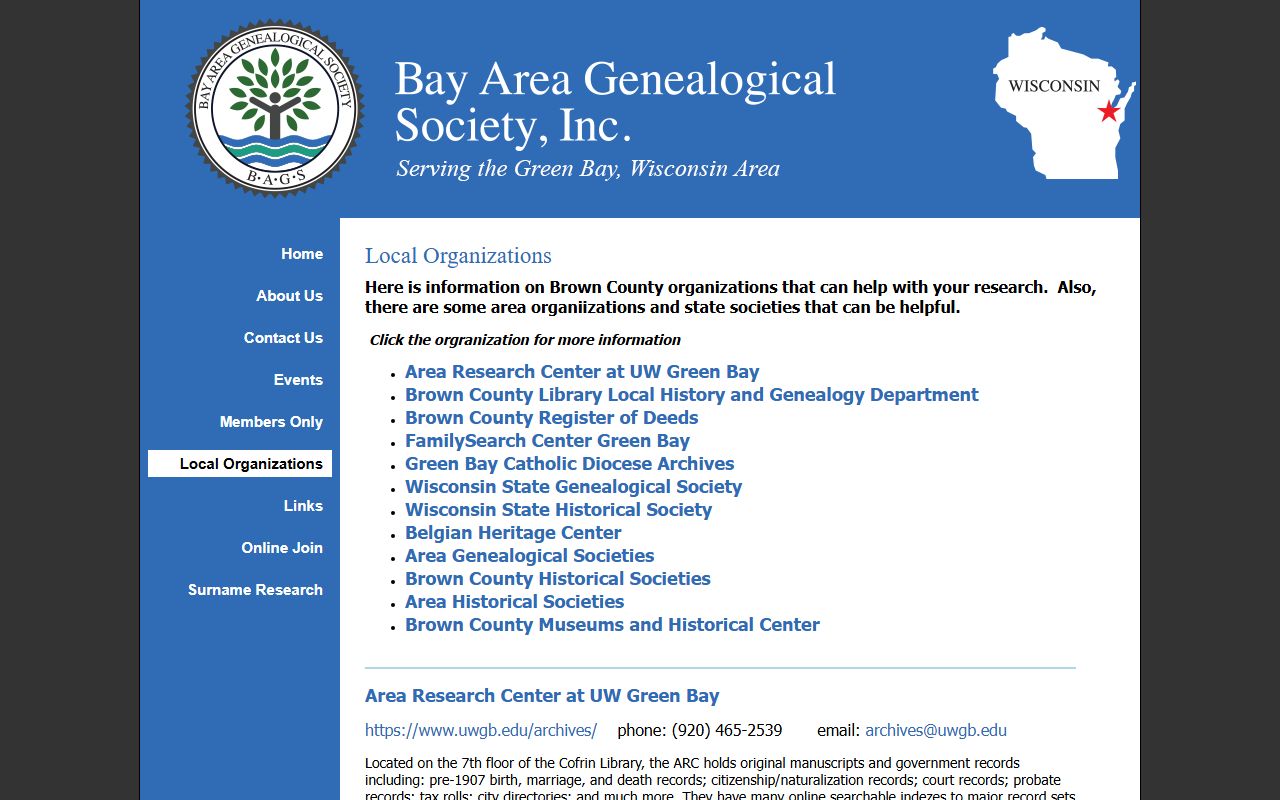
This image fits Green Bay because the register is the county office behind the city’s official record trail.
The state fallback image links to wisconsinhistory.org, which is the best broader backup for older Wisconsin family history.
It belongs here because older Green Bay lines often need a statewide index or pre-1907 record trail to finish the search.
Green Bay Genealogy Help
The Brown County Library Local History and Genealogy Department is a major help point because it combines local history, census, newspaper, and directory work in one room. That is the sort of place that can save a city search when a surname appears in several neighborhoods or in several generations. It is also especially useful for French-Canadian, military, and cemetery research, all of which show up often in Green Bay family history.
The UW-Green Bay Archives and Area Research Center provides the deeper regional archive layer. Its pre-1907 records, probate files, court case files, land and tax rolls, and naturalization material help when a family line crosses the city boundary or reaches into older county material. That matters in Green Bay, where a surname may appear in town, county, church, and court records all at once. The archive can help keep those pieces together.
For wider support, use the Wisconsin Historical Society, BadgerLink, Wisconsin State Genealogical Society, National Archives at Chicago, and BLM General Land Office Records. Those sources help when a Green Bay line reaches into older state or federal records, but they work best after the city repositories have already narrowed the path.
Green Bay Genealogy Access
Green Bay genealogy access is strong because the city gives you both local and regional routes. If you need an official county copy, the register of deeds is the place to go. If you need local history context, the library is often the best first stop. If you need older records or a wider archive, UW-Green Bay has the area research center. That layered setup makes the city easy to use once you know the record type you want.
The register’s rules are worth noting because they protect the records. Valid photo identification is required, and the office does not allow cameras, cell phones, tablets, or other digital devices in the record area. That can sound strict, but it helps keep the search orderly. The library and archive are more flexible for background work, so most Green Bay genealogy searches start there and then move to the register when the official copy is needed.
Keep these items ready before you search:
- Exact names and spelling variants
- A year or short date span
- A neighborhood, church, or cemetery clue
- The record type you want first
A focused request helps the city repositories give a cleaner answer, faster.
Note: Green Bay genealogy is strongest when you use the library for context, the archive for older records, and the register for the official copy.
Green Bay Genealogy Next Steps
Start with the Brown County Library when you need census, newspaper, directory, or local history work. Move to UW-Green Bay archives when the family line needs pre-1907 records, probate, or naturalization context. Use the Register of Deeds when you need a certified county record or land copy. That order keeps the search practical and helps you avoid requesting the wrong record first.
Green Bay genealogy is best handled in layers. The library gives you the city story, the archive gives you the older paper trail, and the register gives you the official county file. When those three are used together, the family line is much easier to trace and trust.