
Search Fitchburg Genealogy
Fitchburg Genealogy research works best when you use the city clerk, Dane County records, the public library, and the local historical society together. Fitchburg does not rely on one office alone. City records can confirm place and timing, Dane County can handle the official vital record path, and the library and historical society add obituaries, plat books, family-history titles, and local archive material that make a family line easier to follow. If you begin with one name, one date range, and one record type, Fitchburg gives you enough local and county support to turn a rough clue into a usable search.
Fitchburg Genealogy Records
The Fitchburg City Clerk's Office is one of the clearest starting points for Fitchburg Genealogy because it handles records management, City Council support, election administration, and licensing. The office is at 5520 Lacy Road, Fitchburg, WI 53711, with main phone 608-270-4200 and clerk line 608-270-4210. Those services are not the same as county vital records, but they matter when a family trail is tied to local government records, notices, or city administration. In a city like Fitchburg, the city record layer can help place a household before you move into the county vital record path.
The county record path runs through Dane County, which serves Fitchburg for vital records. The research file places the office at 210 Martin Luther King Jr Blvd #110 in Madison, with phone number (608) 266-4551 and weekday hours from 8:00 AM to 4:30 PM. Birth, death, marriage, and divorce access are all part of that county-level route. Fitchburg Genealogy benefits from that arrangement because local city clues and county record access sit close together. Once the city or library gives you the likely year and event, the county office becomes the practical place to confirm it.
The Fitchburg Public Library gives Fitchburg Genealogy a strong public research base. Its genealogy databases include Ancestry Library, Archive of Wisconsin Newspapers, HeritageQuest, Newspapers.com Library Edition, Recollection Wisconsin, and Wisconsin Historical Society Family History Records. That mix is useful because it lets a researcher move from a city clue to statewide and newspaper context without leaving Fitchburg. The library is especially valuable when a family line is easier to trace through obituaries, local newspaper references, or indexed family-history records than through a direct certificate request.
The Fitchburg Historical Society adds the city-specific local history layer. It is housed in the Fitchburg Room on the second floor of Fitchburg Public Library and keeps photographs, articles, obituaries, and plat books spanning 1861 to 1904. The research file also notes family-history titles, an online collections database, Irish-settler research, and appointment-based viewing. That makes Fitchburg Genealogy more local and more usable. Instead of treating Fitchburg as only a county sub-location of Madison, these materials let the city stand on its own in the record trail.
Note: Fitchburg Genealogy works best when the city clerk provides the local record frame, Dane County handles the official copy, and the library and historical society supply the family context.
Fitchburg Genealogy Search Tips
Start with the strongest clue you have. If the clue belongs to city government, meeting records, or a local administrative trail, the city clerk is the right first stop. If it points to a birth, death, marriage, or divorce record, move quickly to Dane County. If the clue is a newspaper item, plat note, obituary, or family-history title, the library and historical society may give you the clearest first answer. Fitchburg Genealogy gets better when the source fits the clue from the start.
The historical society material is especially useful when a surname is tied to early Fitchburg settlement. The family-history books in the research block and the plat books from 1861 to 1904 suggest that place-based work can be just as important as a direct vital-record search. That is one reason Fitchburg Genealogy rewards a careful local approach. A plat book or obituary can confirm the right line before a county request is ever sent.
Bring these details with you:
- Exact names and likely spelling variants
- A year or short date range
- A city, neighborhood, or plat clue
- The record type you want first
That short list makes the city, county, and library sources easier to use in sequence.
Fitchburg Genealogy Images
The manifest links the Fitchburg City Clerk image to the city clerk page, which is the main city-government records source for Fitchburg Genealogy.
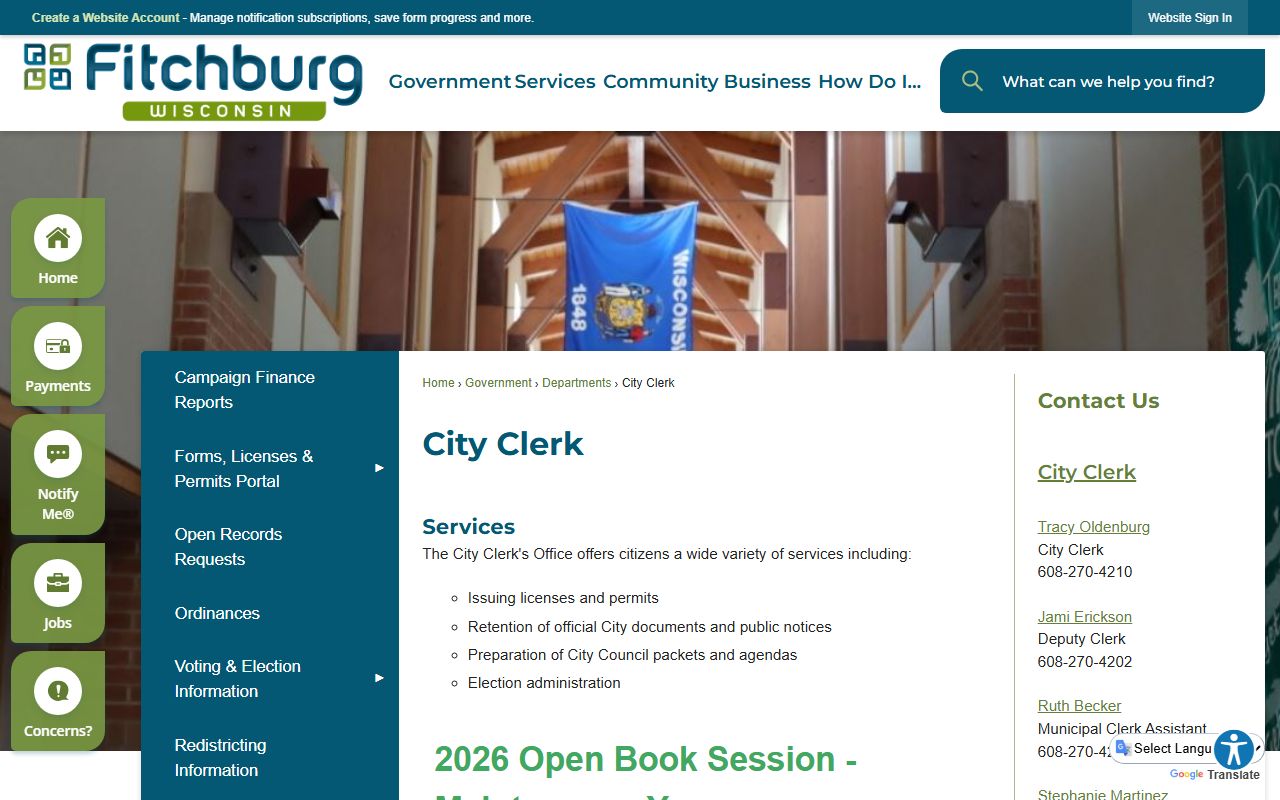
This image fits Fitchburg because the city clerk is where local records management and city-document trails begin.
The manifest also links the public library image to the Fitchburg Public Library page, which supports database and local-history research for Fitchburg Genealogy.
That view belongs here because the library and historical society work together to support the city's family-history search path.
The Wisconsin Historical Society image in the state set links to wisconsinhistory.org, which is a strong backup when Fitchburg Genealogy needs wider Wisconsin context.
This support image works well because Fitchburg researchers often move from local history material into broader Wisconsin family-history records.
Fitchburg Genealogy Help
The public library is the most approachable help point because it combines database access with a local building that also houses the historical society. That gives Fitchburg Genealogy a practical home base. You can move from statewide newspaper or family-history databases to local Fitchburg photographs, articles, and obituaries without changing cities. The same location also makes appointment-based historical society work easier to plan.
The historical society is especially useful for early-settlement and family-book work. The research notes mention Irish-settler research, family-history titles, plat books, and an online collections database. Those are the kinds of details that help separate one Dane County family from another when both appear in the same general area. Fitchburg Genealogy becomes much more specific once a surname is tied to a local family-history book or plat location.
For broader support, the BadgerLink, Wisconsin State Genealogical Society, Wisconsin Historical Society, and Wisconsin courts are all useful when a Fitchburg line reaches into statewide records or later court material. Those sources work best after the city and Dane County sources have already narrowed the search.
Fitchburg Genealogy Access
Fitchburg Genealogy access is practical because the local and county sources complement each other. The city clerk handles the city-document side. Dane County handles the vital-record side. The library and historical society handle the local-history side. That means a search can move from a city clue to a county record and then back to a plat book or obituary without losing the line.
The Dane County office also gives researchers a clear time-and-place route because it sits close to Fitchburg and keeps standard weekday hours. If the family line begins with a drive from Fitchburg to Madison, the research file even notes the typical route and transit context. That reinforces a simple point: Fitchburg Genealogy is local enough to feel manageable, but strong enough to support a real proof path once the right office is chosen.
Keep these items ready before you search:
- Exact names and likely spelling changes
- A year or short date span
- A city, plat, or family-history clue
- The record type you want first
That preparation makes each step cleaner and keeps the local and county sources working together.
Note: Fitchburg Genealogy is strongest when local history is used to narrow the line before the county record request is made.
Fitchburg Genealogy Next Steps
Begin with the city clerk if the clue comes from local records or city administration. Move to Dane County when you need a county vital record. Use the public library when the line needs newspaper, database, or Wisconsin family-history help. Add the Fitchburg Historical Society when a family book, plat map, obituary, or early-settlement trail becomes important. That sequence keeps Fitchburg Genealogy focused and local.
Once one source confirms the next, the city becomes easier to read. A local article can point to a plat. A plat can point to a county record. A county record can confirm the family line. That steady approach is what makes Fitchburg Genealogy practical even when the first clue is small.