
Search Eau Claire Genealogy
Eau Claire genealogy research is unusually well supported for a city of its size. The local archives at UW-Eau Claire reach into vital records, naturalization, census material, probate, court files, land, and tax records, while the public library, genealogy society, and museum add local history and photo depth. That gives researchers several ways to connect a name to a family line without leaving the city. Start with the record type you already know, then use the Eau Claire repositories to narrow the date, confirm the household, and build the story with local context. The best results usually come from using more than one source in order.
Eau Claire Genealogy Records
The UW-Eau Claire Archives and Area Research Center is the central archival source for Eau Claire genealogy. It is in McIntyre Library on Garfield Avenue and its local-government records cover Eau Claire County plus nearby counties such as Buffalo, Chippewa, Clark, Rusk, and Taylor. For Eau Claire County, the archive lists vital records from 1852 to 1907, naturalization declarations from 1854 to 1980, petitions from 1906 to 1991, certificates from 1857 to 1928, federal census material from 1860 to 1930, Wisconsin state censuses from 1855 to 1905, probate cases from 1856 to 1953, circuit court cases including divorce from 1857 to 1972, land records, and tax records. That is a wide research base, and it gives Eau Claire genealogy a strong legal and civic trail.
The public library adds a more approachable research layer through its genealogy page. L.E. Phillips Memorial Public Library offers genealogy research help and local history access, which is useful when a family line appears in a city directory, newspaper notice, or local history note before it shows up in a formal certificate set. Eau Claire genealogy often needs that kind of bridge. A library clue can point to a court file, and a court file can point back to a census or land record. That back-and-forth is exactly what makes city research feel complete instead of thin.
The Genealogical Research Society of Eau Claire adds another important route. It meets the second Saturday from September through May, offers genealogy help from noon to 1:00 PM, and publishes the Sawdust City Roots newsletter five times a year. The society is based at the Chippewa Valley Museum and supports western Wisconsin family research with local knowledge that can be hard to find in a statewide source. For researchers who need a person-to-person starting point, that kind of society support is valuable because it often saves time before the first record request is even sent.
The Chippewa Valley Museum Research and Photo Library rounds out the city’s source network. It is open by appointment and offers more than 20,000 historic photographs, oral histories, genealogy resources, logging and lumbering archives, and a Hmong in Eau Claire collection. That mix matters because Eau Claire genealogy often gains power from local story material as much as from civil records. A photo, oral history, or neighborhood collection can confirm a family connection that the archive alone cannot fully explain.
Note: Eau Claire genealogy works best when the archive, library, society, and museum are used as a connected path rather than as separate research silos.
Eau Claire Genealogy Search Tips
Start with the most solid clue you have. If the family line is tied to a county event, the UW-Eau Claire archives are usually the first stop because they cover vital, land, probate, and court material in one place. If you need local history, newspaper context, or a hand with a surname that shows up in city life, the public library can be the better opening point. Eau Claire genealogy is easier when you choose the source that matches the record type instead of starting in the wrong place.
The archive’s coverage is broad enough to support both city and neighboring-county research, so do not stop at the Eau Claire County label if the family moved. A declaration of intention, a petition, a divorce case, or a tax record may be the link that ties a family together. The same is true for the museum and society collections. A photograph, oral history, or newsletter note can push a search toward the exact name spelling that a record index needs. When the family is hard to pin down, those softer sources still matter.
Bring these details with you when you search Eau Claire genealogy:
- Full names and spelling variants
- A year or narrow date span
- A county, neighborhood, or family clue
- The record type you need first
- Whether the line may cross into nearby counties
That list helps you move from broad local history to the exact record that proves the line.
Eau Claire Genealogy Images
The manifest links the UW-Eau Claire image to the local government records page, which is the strongest archival entry point for Eau Claire genealogy.
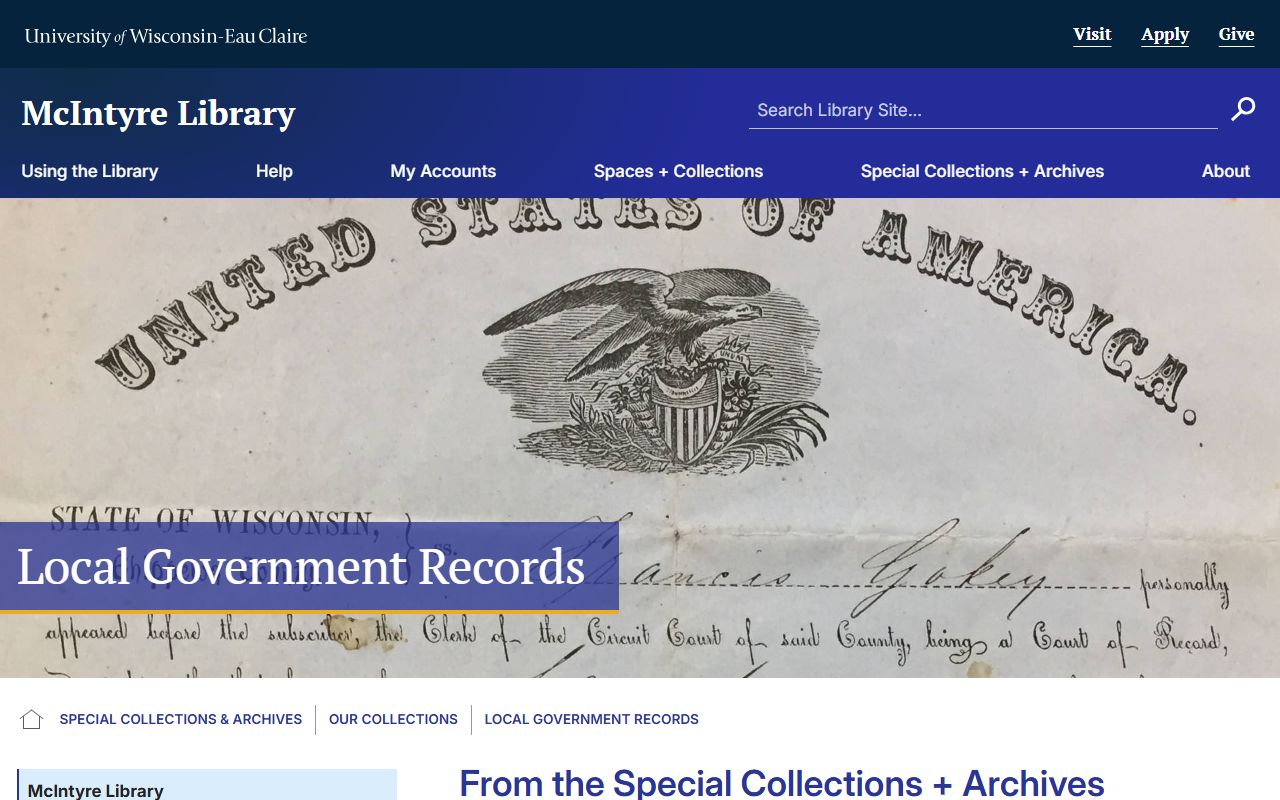
This image fits Eau Claire because the archive holds the county record groups that most family searches need first.
The state fallback image links to wisconsinhistory.org, which is the best statewide support source when a local Eau Claire search needs broader Wisconsin context.
That view belongs here because Eau Claire family lines often start in a local archive and finish in a statewide index.
Eau Claire Genealogy Help
The public library is an easy help point when you need someone to guide a first search. Its genealogy page is built for research assistance and local history access, which makes it useful when a family name appears in a newspaper, a directory, or a neighborhood history before it shows up in a court file. For Eau Claire genealogy, that kind of human help can reduce dead ends and keep the search moving. A good librarian search hint can save a trip and point you to the right collection faster than a broad online query.
The Genealogical Research Society of Eau Claire is especially useful when you want local knowledge from people who know the region well. Its meetings, help hour, and newsletter show that it is active in western Wisconsin genealogy preservation. That matters when a family line moves through logging towns, river neighborhoods, or smaller nearby counties that are easy to overlook. The society can help frame the research question before you dig into the archive or the museum.
The Chippewa Valley Museum Research and Photo Library gives Eau Claire genealogy a visual and oral-history layer that is hard to replace. Historic photographs can confirm a house, a business, or a neighborhood. Oral histories can preserve family names and settlement stories. The Hmong collection adds another important piece of city history. For broader support, the BadgerLink, Wisconsin State Genealogical Society, Wisconsin Historical Society, and Wisconsin courts are useful when the search needs statewide records, family history databases, or court context. Those sources do not replace the Eau Claire repositories. They extend what the local sources already started.
Eau Claire Genealogy Access
Eau Claire genealogy access is good because the city offers both institutional and community-based research help. The archive gives you deep record coverage, the library gives you public-facing research assistance, the society gives you local networking and guidance, and the museum gives you photo and oral-history depth. That mix lets you move from a technical record search to a broader family story without leaving the city. It is a practical setup for careful researchers.
The archive is especially strong for families whose paper trail includes court, land, probate, or naturalization material. Because it covers nearby counties as well as Eau Claire County, it can also help when a family line crosses a boundary but still belongs to the same settlement pattern. The museum and society are more useful for context and community ties. Together they give Eau Claire genealogy enough range to support both official record work and family-history interpretation.
Keep these items ready before you search:
- Exact names and likely spelling shifts
- A year or short date range
- A neighborhood, church, or family clue
- The record type you want first
- Whether the search may involve a nearby county
That kind of preparation makes the archive and the library much easier to use.
Note: Eau Claire genealogy is strongest when the archive handles the proof and the library, society, and museum help explain the family’s place in the city.
Eau Claire Genealogy Next Steps
Start with UW-Eau Claire when you need formal county or circuit court material. Move to the public library when you need local history help or a surname check in city resources. Add the genealogy society when you want community knowledge or newsletter-level clues. Finish with the museum when you need a photograph, oral history, or specialized local collection. That order is simple, but it works well for Eau Claire genealogy because the city has enough complementary sources to support it.
If the family line crosses into Buffalo, Chippewa, Clark, Rusk, or Taylor County, keep going instead of stopping at the first county label. Eau Claire genealogy often stretches across the region, and the archive is built to handle that reality. A surname in a city directory, a court file, and a photograph can tell the same story from different angles. When those angles line up, the family line gets much easier to trust.